While forests are increasingly celebrated for their importance, grasslands deserve equal attention. Far from being mere empty expanses, natural grasslands are indispensable ecosystems. Their remarkable biodiversity, water retention capacity and soil protection functions make them critical allies in the fight against climate change.
Ask where most plant species on Earth are found, and many will instinctively point to tropical rainforests. Ask what sustains us, and trees often take centre stage. Planting trees is widely seen as an act of environmental good, and those advocating social change are frequently challenged to plant more of them. Trees are indeed key players in carbon sequestration, and deforestation has become a symbol of environmental harm. Yet it is essential to recognise that grasslands perform ecological roles no less significant than those of forests.
It is also important to clarify a common misconception: neatly trimmed, golf-course-style lawns are not the same as natural grasslands, even if everyday language tends to blur the distinction. True grasslands may be dominated by grasses, but their living communities are far richer—summer meadows filled with chamomile and wild orchids, alive with crickets, locusts, grasshoppers and butterflies, alongside large grazing animals. Many endemic species and subspecies inhabit these ecosystems, found nowhere else but within the Carpathian Basin, such as: magyarföldi husáng (Ferula sadleriana), White-seeded seseli (Seseli leucospermum), Hungarian birch mouse, Pannonian knapweed (Centaurea sadleriana), Hungarian meadow viper (Vipera ursinii rakosiensis), budai szakállasmoly (Glyphipterix loricatella) or among many other the Magyar tarsza (Isophya costata).
Grasslands can be astonishingly species-rich. In fact, when examined at small spatial scales—say, plots of 10 to 100 square metres—mountain hay meadows exhibit the highest plant species richness on Earth, surpassing even tropical rainforests. This is no exaggeration: such meadows, shaped over decades by moderate, non-industrial human use, are considered world-record ecosystems in terms of biodiversity.
Undervalued, yet indispensable
While deforestation rightly symbolises environmental destruction in the public imagination, grasslands are often perceived as “empty” land. As a result, afforestation projects or even the construction of solar parks are frequently framed as green developments—even when they involve the degradation of ecologically valuable grasslands. Ploughing or building over these habitats can have even more severe consequences.
Part of this undervaluation stems from a widespread interpretation of ecological theory: in Hungary, forests are often taught as the so-called “climax community”, the endpoint towards which all habitats develop. This has led to the mistaken belief that grasslands are somehow less natural. In reality, grasslands are shaped and maintained by natural forces just as much as forests are—through grazing by large herbivores, limited rainfall, or fire. Clearings in shrublands, loess grasslands, and saline or sandy steppes preserve remnants of ancient grassland ecosystems of exceptional natural value.
The human role: not destruction, but stewardship
It is worth recognising that long-term, sustainable, non-industrial human activity can itself function as a valuable ecological factor. Many grassland habitats owe their existence and persistence precisely to such practices. This challenges the notion that only untouched wilderness can be truly valuable. So-called semi-natural habitats—often exceptionally rich in species and ecological function—frequently depend on regular human presence. Describing this as “intervention” is somewhat misleading, as the term carries negative connotations. It is more accurate to think of it as participation. The periodic removal of grassland vegetation—whether through grazing or mowing—is essential to prevent the encroachment of shrubs and trees, which would otherwise outcompete grassland species.
Today, however, this form of participation is often absent or poorly implemented. Grasslands may be abandoned and become overgrown with shrubs, or degraded through overly intensive use such as fertilisation, overgrazing or ploughing. Urban development poses an additional serious threat. Not long ago, these habitats formed the backbone of food production, energy supply and transportation systems.
When animal traction played a central role in human societies, and imported meat from distant, degraded ecosystems was not an option, the Hungarian landscape was shaped by grazing animals—and with them, by grasslands interwoven with forests and wetlands. Wood pastures and hay meadows were widespread. Traditional ecological knowledge held by herders was deeply rooted in understanding grassland dynamics and livestock behaviour. These landscapes were not simply occupied but carefully shaped: promising saplings were protected from grazing animals to grow into large, shade-giving trees. In some cases, even herding dogs “were told” which trees to protect from the herd. Undesirable weeds were controlled with specialised tools (so called “acatoló kés”), and grazing was managed with remarkable ecological sensitivity—taking into account the feeding habits of different livestock species and the seasonal rhythms of the land, ensuring long-term sustainability of forage resources.
What do we gain from grasslands? More than we might think
Grasslands are not only outstanding arenas of biodiversity, but also provide a wide range of benefits to human societies. They facilitate the infiltration of rainwater into deeper soil layers, playing a key role in replenishing groundwater reserves. Their resilience allows them to withstand periodic flooding, making them particularly valuable in water management approaches that prioritise retention. They provide habitat for pollinators as well as numerous other insect species, including predators—thereby indirectly supporting food production. Grassland plants stabilise soils, reduce erosion, and support ecological farming. All this is achieved without the need for synthetic fertilisers or chemicals, while still producing high-quality forage. The resulting livestock manure can in turn serve as a natural substitute for artificial fertilisers on arable land.
Industrial livestock farming raises serious concerns in terms of animal welfare, environmental impact and human health. By contrast, food systems based on local conditions and resources can yield smaller quantities of animal products, but of significantly higher quality. Grasslands can form the cornerstone of such sustainable systems. Ruminants, in particular, play an essential role: they are able to convert plant materials inedible to humans—such as grasses—into food suitable for human consumption. Grazing, when practised in the right place and manner, is among the least resource- and energy-intensive forms of food production. Products derived from animals raised on species-rich grasslands (milk and meat) also tend to have more favourable nutritional profiles than those from industrial systems—some studies even suggest that these differences may influence the risk of certain cancers. Grasslands are also important sources of medicinal plants, which, whether processed or used as pharmaceutical raw materials, contribute to health and well-being.
As climate change intensifies, precipitation patterns are becoming increasingly erratic, often leading to the thinning of forests and the expansion of forest-steppe habitats. Preserving existing grasslands is therefore vital: they can provide the species pool for newly emerging grassy ecosystems. This is particularly important on the Great Hungarian Plain, where one of the most urgent tasks in responding to climate change is to shift from intensive arable farming towards water-retentive, nature-based habitats.
It is well known that trees store large amounts of carbon from the atmosphere—visible in the very form of their trunks. Grasslands, by contrast, store carbon in a less visible but equally important way: in their soils. This represents not only vast carbon reserves but also a distinct advantage: in the event of fire, this carbon is far less likely to be released than that stored in woody vegetation. For this reason, tree planting or afforestation is not always the most appropriate response to climate change in Hungary; in many cases, restoring and protecting natural vegetation—particularly grasslands—offers a more effective solution.
Grasslands hold not only ecological but also recreational value. They provide ideal settings for hiking, foraging for mushrooms, or birdwatching. Their significance extends beyond tradition: contemporary scientific research is closely linked to them in many fields. Topics such as biological invasions, species coexistence dynamics, the ecological role of fire, landscape structure, the impacts of climate change, and restoration ecology—all rely on grasslands as key model systems.
Grasslands under threat – yet there is hope for recovery
Today, grasslands face numerous threats. In addition to previously mentioned pressures—such as ploughing, construction, afforestation, abandonment, or overly intensive use—new challenges have also emerged. Invasive plant species pose a serious risk, particularly black locust and tree of heaven, both of which are spreading rapidly in Hungary. Nutrient accumulation resulting from industrial agriculture, as well as the drainage of wet grasslands—often through artificial ditches—further degrade these habitats. Although grasslands respond sensitively to such disturbances, their capacity for regeneration is remarkable: with appropriate management, they can recover much of their ecological value.
A striking example comes from a garden in the southern Vértes region, once cultivated as an alfalfa field. After cultivation ceased and the land was mown only once or twice a year, protected species began to appear from surrounding natural habitats—not only plants but animals as well. Today, more than a hundred specimens of three-toothed orchid (Neotinea tridentata) adorn the site, alongside other remarkable species such as the green-winged orchid (Anacamptis morio), the lesser butterfly-orchid (Platanthera bifolia), Pannonian knapweed (Centaurea sadleriana), and other rare native orchids. Habitat restoration can occur not only through passive abandonment but also through active measures, including seed sowing, the spreading of hay, grazing, or even controlled burning.
Wildflower meadows in cities: a new opportunity for nature-friendly habitats
Often referred to as “bee pastures”, a more accurate term would be “urban wildflower meadows” for these emerging habitat types that are appearing in an increasing number of towns and cities. These initiatives represent a welcome effort to reintroduce nature-friendly vegetation into urban green spaces. From a conservation perspective, prioritising native plant species—ideally using locally sourced seed mixtures—is the best approach. Establishing such habitats takes time and patience, and it also requires accepting that mowing will occur only infrequently. In return, these meadows offer a wealth of ecological and aesthetic benefits.
A mosaic in motion: landscape diversity as a condition for life
The dry, sunlit rocky grasslands of the southern Vértes present a stark contrast to the fen meadows below them, even though both are grassland habitats. Similarly, there are vast differences between saline steppes and the cool, acidic hay meadows of the Őrség region. A healthy landscape derives its value precisely from this mosaic-like diversity of habitats, existing in countless variations. Forests, grasslands and wetlands do not form sharply separated units, nor do the species that inhabit them confine themselves strictly to one habitat. The Apollo butterfly, (Pamassius apollo) for example, feeds on nectar in flower-rich meadows, while its caterpillars depend on Corydalis species found on the forest floor in early spring. Other grassland butterflies retreat into forests during the summer heat, and some species even migrate between dry rocky grasslands and wet meadows to survive. The persistence of biodiversity—and the ability to adapt to climate change—depends on maintaining this complexity and connectivity in our landscapes.
What can we do for grasslands? A shared responsibility
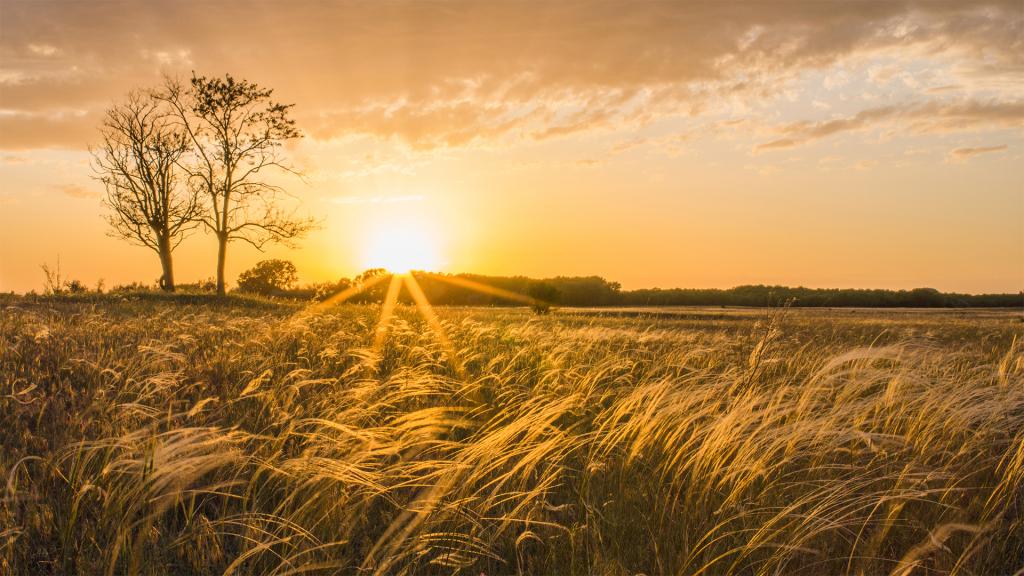
As a first step, both individually and collectively, we must learn to value and appreciate grasslands—to recognise what these habitats provide. This is not difficult: one need only think of summer flower meadows, indispensable pollinators, shimmering feather grasses, or the fairy-ring mushrooms (Marasmius oreades)—all gifts of grasslands. Yet appreciation alone is not enough if these habitats continue to disappear through ploughing, development, or conversion into forests or solar parks.
Despite their troubled history, grasslands represent irreplaceable natural assets. We must preserve the remaining areas and begin restoring those that have been degraded. Encouragingly, this is no longer merely a matter of intent: the European Union’s Nature Restoration Regulation obliges all Member States, including Hungary, to rehabilitate their habitats. The next step is to ensure that this work is carried out to a high professional standard.
There is much to be done not only at the national but also at the local level. Gardens can be managed in a more nature-friendly way: leave space for wildflowers and avoid mowing everything short and frequently. When consuming meat, choose products from local, pasture-based systems. Around settlements, species-rich grasslands should be designated as protected areas, with local authorities supporting such initiatives.
Grasslands for a liveable future
Grasslands need us—if only to refrain from destroying them. Yet we can do more: through gentle, nature-friendly management, we can actively sustain these habitats. In an era of escalating climate crisis, they may prove vital for human survival, while also forming the basis of ecologically sound food production. They could become key pillars of resilient, self-reliant societies built on local resources—while continuing to support an extraordinary diversity of life and standing as invaluable natural treasures in their own right.
All this makes it clear that grasslands can play a significant role in addressing some of the most pressing environmental challenges:
- They mitigate droughts, water scarcity, and flash flooding caused by intense rainfall.
- They provide habitat for a wide range of species, including threatened pollinators.
- They contribute to both climate change mitigation and adaptation.
- They can underpin resilient, self-sufficient food systems.
The Pannonian rocky grasslands, the vast plains of Hortobágy, and the flowering hay meadows of the Őrség region rank among Hungary’s greatest natural treasures. Their protection is, above all, a shared national responsibility.
Source: Levente Pribéli, Greenpeace
Photo: Tamás Koncz-Bisztricz – Feather grass on sandy soils, “Secrets of Grasslands I” photo competition, 3rd place