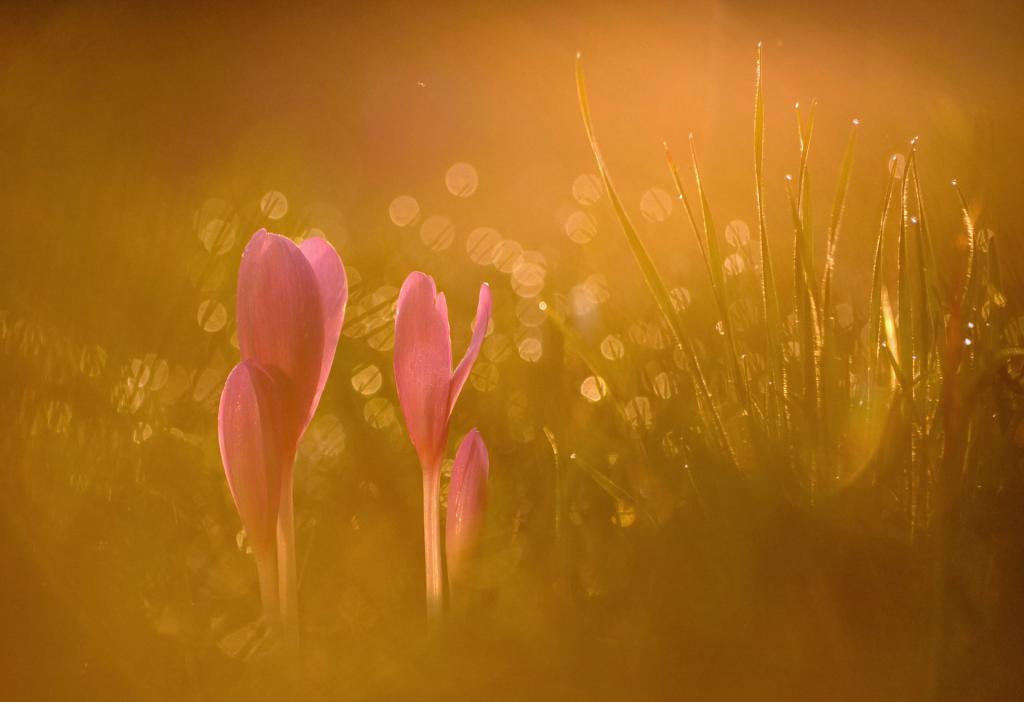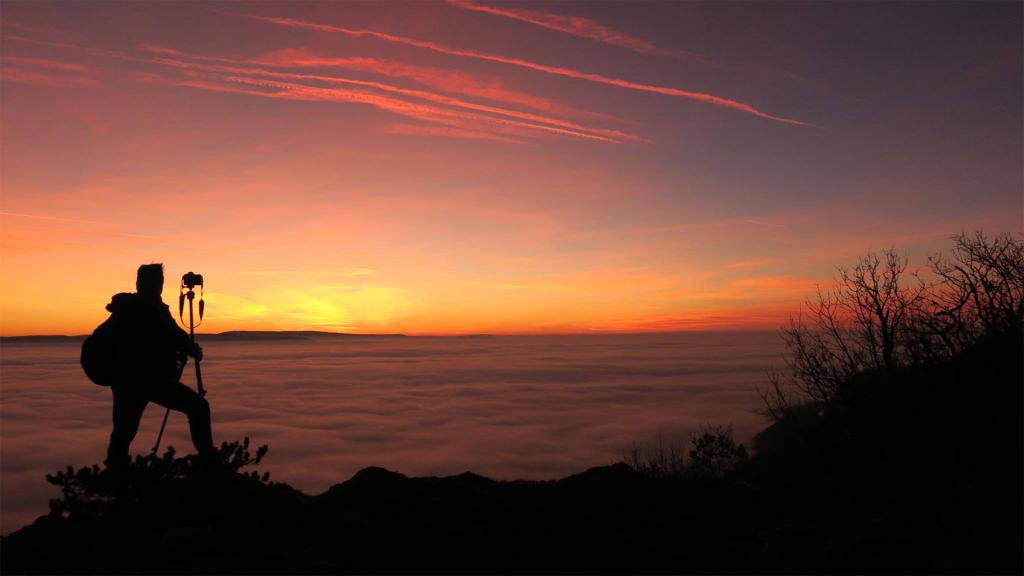
The fifth round of Secrets of the Grasslands, a nature photography competition, aims to draw attention to the beauty and diversity of grassland ecosystems. In this year’s edition, one of the challenges set for entrants is landscape photography.
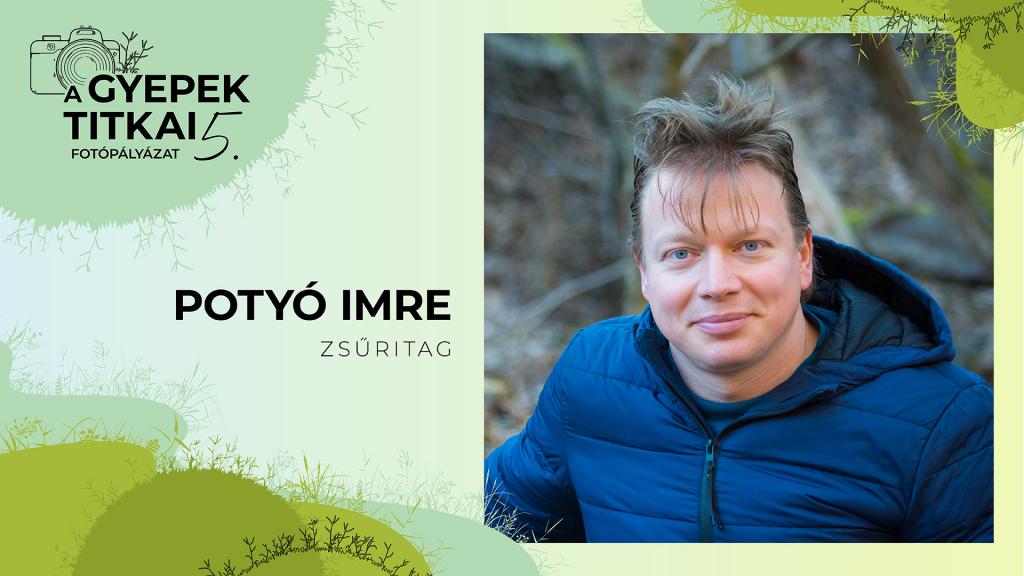
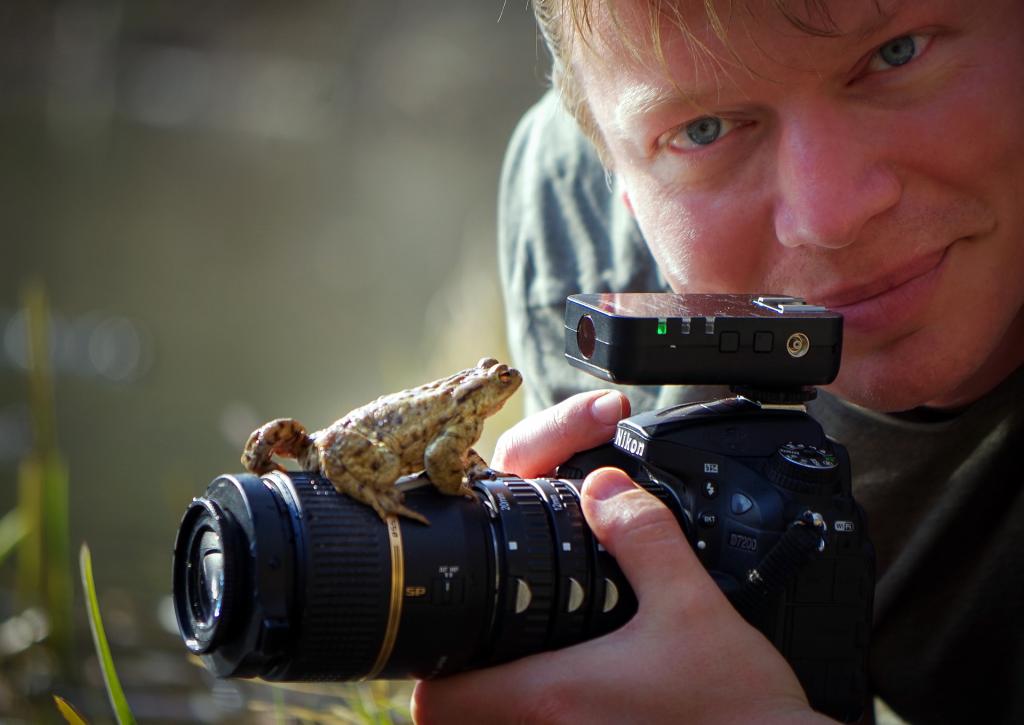
We spoke to Imre Potyó, a nature photographer, member of the competition jury, and staff member of the Danube–Ipoly National Park Directorate, where he works as an environmental educator at the Hiúz House Visitor Centre in the Börzsöny Mountains. A two-time recipient of Hungary’s Nature Photographer of the Year award, he has also been honoured with the Grand Prize of Hungarian Nature Photography.
Before discussing the competition and its details, could you tell us when and how you became a nature photographer?
I spent a great deal of time outdoors from an early age. My parents and I regularly explored the countryside and the mountains, and I also roamed beneath the giant trees of the Danube floodplain near my hometown of Göd. When I was 13, I received a pair of binoculars — and from that point onwards, I became completely absorbed in birdwatching.
I joined BirdLife Hungary (MME) and carried out ornithological surveys in the Börzsöny Mountains and along the Danube. My interest in the natural sciences eventually led me to the University of Szeged, where I studied environmental science with a specialisation in nature conservation.
My interest in photography began during my university years. At first, I used a simple compact digital camera on birdwatching trips and hikes, but over time I found myself increasingly drawn into the creative process. I wanted to share the experiences I had out in nature with others, and I felt that a strong photograph could be a powerful way of doing so. That motivated me to buy my first serious camera system, which I have continued to develop ever since. At some point, I realised that the time I spent in the field had gradually transformed into nature photography.
Is nature photography more than a profession for you — is it a way of life?
Absolutely. It is a way of life — an inner drive, a constant impulse. Nature photography, and communicating the experiences that come with it, is my passion.
Environmental awareness and public engagement are particularly important to me. Through my images, lectures, popular science articles and guided walks, I have had the opportunity to bring many people closer to nature. I regularly publish in Élet és Tudomány (Life and Science), and Varázslatos Magyarország (Magical Hungary) magazines, as well as in other print and online outlets.
Most of the time, I explore nature on my own. I spend a lot of time imagining, experimenting, and venturing outdoors at night. I am especially drawn to close-up images created with wide-angle lenses, bold perspectives and compositions, and macro photography. Developing a compelling photographic subject often takes weeks of dedicated work.
My favourite locations for photography are the stream valleys of the Börzsöny Mountains and the Danube riverbank near Göd. Because I work for the Danube–Ipoly National Park Directorate in Királyrét, I am fortunate enough to spend a great deal of time immersed in the landscapes and subjects that inspire me most. And if we are driven by imagination and a sense of adventure, sooner or later that will inevitably reveal itself in our photographs.
In 2023, you achieved major international success in Dubai: your photograph capturing the mass swarming of Danube mayflies (Ephoron virgo) won first prize in the Diversity category of the prestigious HIPA photography competition. How does an achievement like this shape your outlook for the future?
Major national and international competitions matter for several reasons. Success on such platforms means that, through competition coverage and media exposure, our images, photographic subjects and the stories behind them can reach millions of people around the world.
Through these photographs, audiences can discover the natural wonders of our fragile planet — and that is deeply inspiring for us as creators.
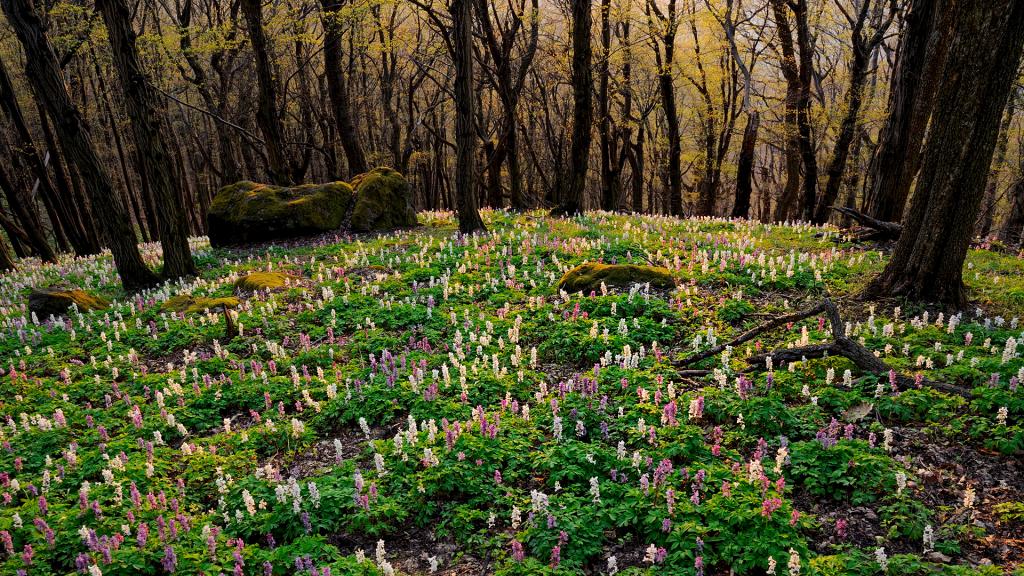
Turning to the competition itself: the integrated Grassland-HU LIFE project aims to ensure the long-term conservation of Pannonian grasslands and their associated habitats. How can nature photographers contribute to protecting grassland ecosystems?
Nature photographers can support habitat conservation in both direct and indirect ways.
Photographs frequently find their way into educational publications, books and interpretive materials, serving an important educational function. At the same time, committed nature photographers can share their experiences and observations from the field, give talks in schools and clubs, and help communicate the realities of the natural world to wider audiences.
Environmental education is vitally important. We can only truly connect with, value and protect what we understand.
Because nature photographers spend extensive amounts of time outdoors, their work often goes beyond image-making alone. Alongside photography, many also gather valuable biological observations and field data. They are well placed to notice environmental decline and negative ecological changes, thereby contributing to both governmental and civil conservation efforts. They may also become directly involved in active conservation initiatives.
To ensure that conservation principles are upheld — and that photographers do not inadvertently harm wildlife — strong natural science knowledge is needed alongside photographic expertise. How common is this among nature photographers?
In most cases, producing distinctive and enduring nature photographs requires not only photographic skill, but also a solid grounding in natural history and careful research. Understanding animal behaviour, plant ecology, unusual weather phenomena, or accurately predicting celestial movements can all be essential elements of intentional image-making. These forms of knowledge also underpin ethical nature photography.
Unfortunately, we still hear of extremely poor practices. These may include digging up protected plants and relocating them to more photogenic settings, stressing or disturbing wildlife, or creating excessive photographer pressure at strictly protected sites. In pursuit of awards or recognition, some individuals are willing to ignore virtually every rule and ethical boundary. However, such photographers rarely remain active in the field for long. In essence, they lack a genuine connection to natural systems and living organisms. They do not truly understand the authenticity, complexity and atmosphere of the natural world.
Could you share a few tips — perhaps even some trade secrets — for landscape photography? Where can the “best” landscape photograph be taken? And how well does a photographer need to know a location in order to produce a successful image?
Landscape photography occupies a distinctive niche within nature photography. It is a genre that demands specialised equipment and techniques: high-quality wide-angle and mid-range lenses, a sturdy tripod capable of withstanding strong winds, filters and graduated filters to manage scenes with a wide dynamic range — and, of course, an excellent pair of hiking boots.
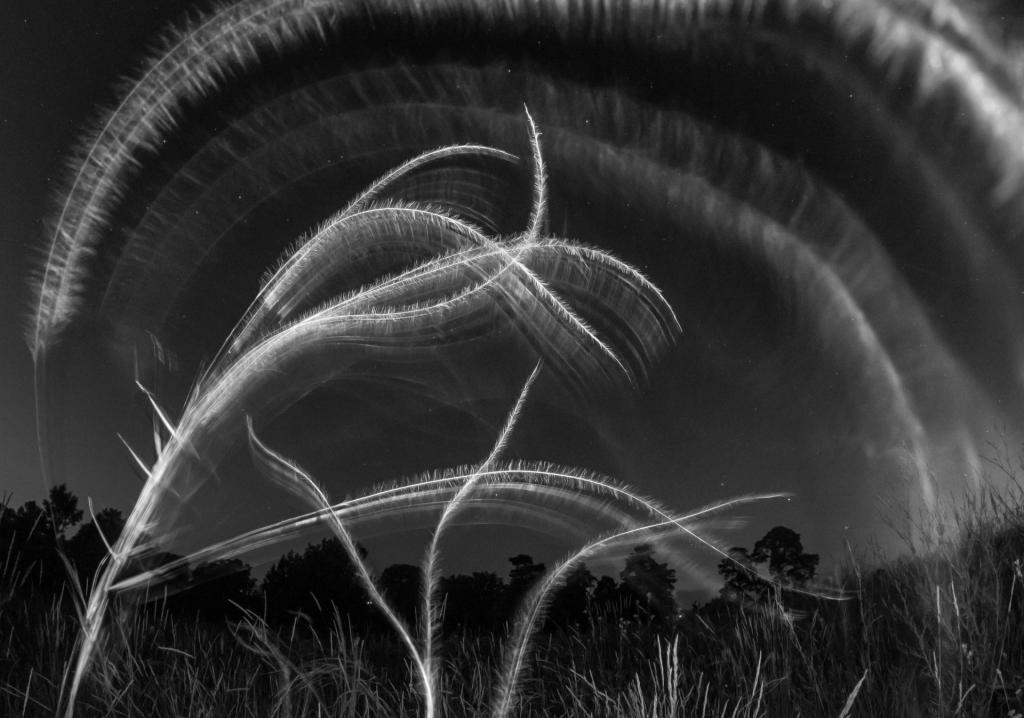
Equally important is the ability to react quickly to rapidly changing weather conditions. Within moments, heat storms can erupt, lightning may streak across the sky, snow squalls can roll in, atmospheric optical phenomena may suddenly illuminate the landscape, and at dawn, ground fog can drift through valleys and low-lying terrain. Thorough knowledge of a location is indispensable. We need to know the scenic mountain viewpoints where dawn light meets the landscape in dramatic backlight; the most beautiful feather grass slopes; the striking forms and textures of open grassland habitats.
In landscape photography, familiarity with place is often just as important as technical skill.
Based on your experience so far, how successfully does the Secrets of the Grasslands competition fulfil its educational role?
An increasing number of nature photographers are discovering and joining this distinctive competition, helping to further amplify the organisers’ mission: showcasing the remarkable world of grasslands and the extraordinary natural values they hold.