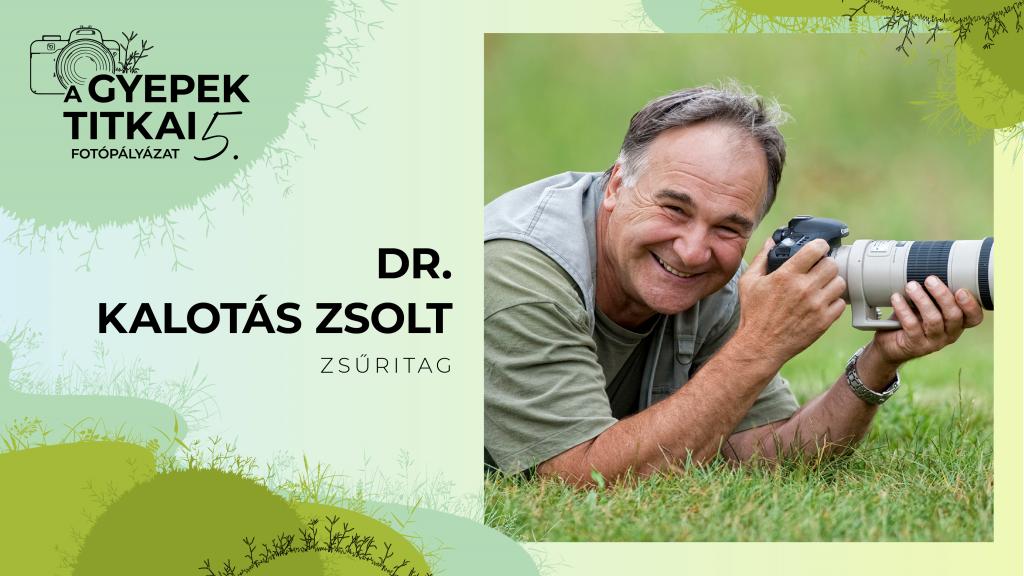
An outstanding photograph is conceived in the mind long before it is captured in the field. This philosophy is closely associated with Dr Zsolt Kalotás, wildlife photographer, founding member and first president of the Hungarian Nature Photographers’ Association (naturArt). In addition to serving as a juror for the Secrets of Grasslands photography competition, he is the recipient of numerous awards and honours. More than 8,500 of his nature photographs have been published in books, conservation magazines, specialist journals and environmental publications. We asked him about the competition, in which the fifth round challenges entrants to present the beauty and diversity of grasslands from a broader perspective.
How does a nature photographer begin their work? Is prior training necessary?
Today, virtually everyone takes photographs in nature, as the digital revolution has made it possible to produce technically sound images not only with cameras, but even with mobile phones. However, if we were to examine how many of the millions of images captured each day would meet professional standards as nature photography, we would realise that only a very small fraction qualifies.
Why is this the case? The answer is straightforward. Creating a strong nature photograph requires, above all, a deep familiarity with the natural world. One must understand the processes taking place within ecosystems and know when and where the chosen subject — whether a mushroom, plant, animal, landscape, cave, underwater environment, or another theme — can be found. It is essential to be aware of the habits and behaviour of animal species, as well as their reactions to human presence. This already implies that successful nature photographers tend to possess considerably broader knowledge than average in this field.
Among award-winning nature photographs, only a very small number owe their success to chance. A truly exceptional image is first formed in the mind, and the journey from conception to realisation can be a long one. Today, the vast majority of winning entries in major international nature photography competitions are the result of careful planning. This includes discovering the subject and navigating the often challenging path to its execution, which demands not only the creation of suitable technical conditions, but also perseverance and patience.
Is further training necessary beyond this? In terms of photographic technique, certainly. But it is also important that the composition forms a harmonious whole — something that benefits greatly from a background in the arts.
How did you become a nature photographer? Was this your original goal?
I have been a devoted admirer of nature all my life, and I consider myself fortunate that my professional career has always been closely connected to it. As a zoological researcher, and later as a professional conservationist, it was essential for me to document what I observed and experienced in the natural world. However, I believe that this vocation truly became the defining element of my life — and that I became genuinely captivated by, and devoted to, nature photography — in 1989, when several fellow nature photographers and I founded naturArt, and I was elected its president. We set ourselves several objectives, including the promotion of an ethical approach to conservation in Hungary, and the elevation of Hungarian nature photography to an international level. I am pleased to say that we succeeded in achieving both aims.
Why does someone become a nature photographer?
I have already touched upon my own reasons in my previous answer. Nevertheless, I believe that beyond a love of nature, two essential qualities are required to become a nature photographer: preparation and perseverance. Results do not come immediately; considerable time and experience are necessary for someone to develop into a truly accomplished nature photographer.
The integrated Grassland-HU LIFE project aims to ensure the long-term conservation of Pannonian grasslands and related habitats. In what ways can nature photographers contribute to nature conservation? Is a specific attitude — a sense of openness and humility towards nature — essential in order to create the intended photograph?
To begin with the main objective of Grassland-HU, the preservation of Pannonian grasslands: why is this important at an international level? Because these habitats have declined dramatically. In Hungary today, grasslands are among the most threatened ecosystems. A few centuries ago, the Carpathian Basin was rich in meadow and steppe habitats, but many were converted into arable land to expand agriculture, while much of what remained was afforested or built over. Transport infrastructure has further fragmented the remnants, severing connections between once continuous grasslands. Today, it is increasingly rare to find grasslands where natural processes dominate. West of Hungary, Pannonian grasslands no longer exist; therefore, it is our responsibility to preserve what remains.
State nature conservation cannot fulfil this responsibility without education and widespread public engagement — areas in which Hungarian nature photographers also have an important role. After all, not everyone can witness the courtship display of the Great bustard (Otis tarda) on the steppe. Very few people will have the opportunity to visit the flowering Pilis flax (Linum dolomiticum) or the “Transylvanian Adonis” (Adonis x hybrida), and many species can only be known through photographs — such as one of the world’s rarest rodents, the Hungarian birch mouse (Sicista trizona), of which perhaps only around 600 individuals remain on Earth. Photographing such protected rarities also carries risks; therefore, I believe that humility towards the values of nature is an indispensable condition in the photographic process.
How do you assess the educational role of the Secrets of Grasslands photography competition?
Education, training and public outreach play an enormous role in helping society to understand and appreciate our natural heritage. One important way to achieve this is not only through speech and writing, but also by accompanying ideas with visual imagery. From this perspective, it is essential to have competitions that draw attention to these values. I hope that the images submitted to Secrets of Grasslands will reach many of our fellow citizens through exhibitions, print media and digital platforms.
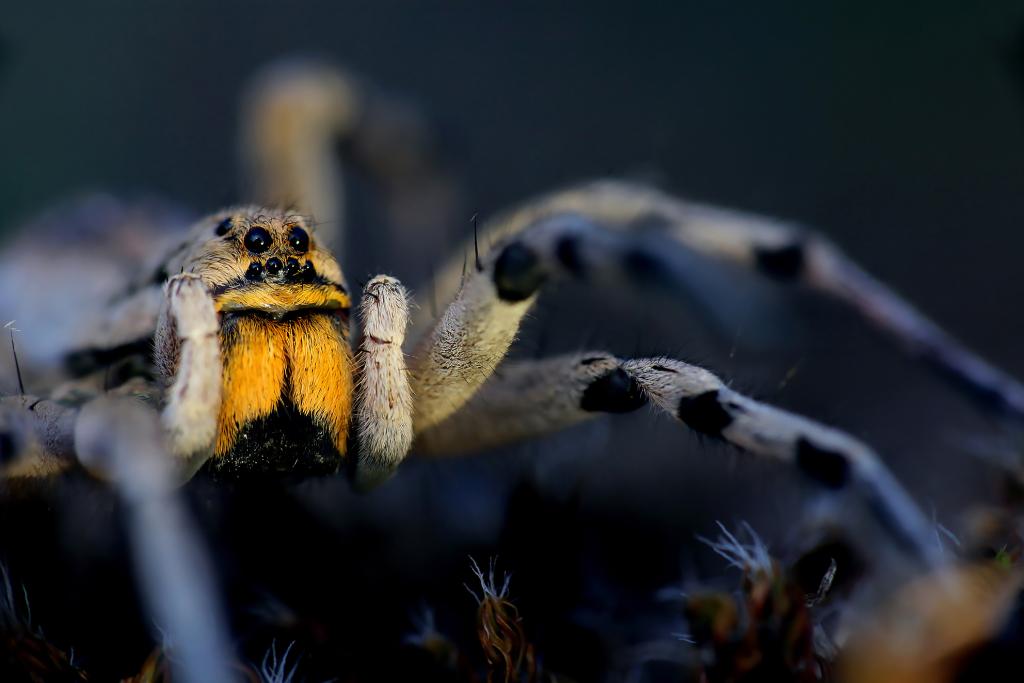
What advice would you give to photographers regarding the creative process, including across all three competition categories?
I have previously mentioned many aspects that are fundamental to nature photography. I would not repeat them here. Nor do I believe these principles need to be divided according to competition categories, as they are all equally important. However, I would offer one piece of advice: we can truly create unique nature photographs when something of our own inner perspective is reflected in the image — when we apply distinctive, original approaches and do not seek merely to imitate others.
Could you share your thoughts on ethical nature photography? How far may a photographer intervene in nature?
When naturArt was founded, we developed the principles of ethical nature photography. The Code of Ethics is publicly accessible on the website of the Hungarian Nature Photographers’ Association.
As this is a comprehensive set of recommendations covering the most important areas of nature photography, it would not be appropriate to highlight only certain aspects. Instead, I would quote Dr Zoltán Tildy, one of the most renowned pioneers of Hungarian nature photography, who wrote in his book Pro Natura:
“There is no image worth causing damage to nature in its preparation. Photographs may only present unaltered natural reality.”
These principles remain the primary guiding framework for members of naturArt.
Could you offer tips for landscape photography? Where can the “best” landscape photograph be taken? How important is familiarity with the area?
Landscape photography is one of the most time-consuming branches of nature photography, as considerable preparation is required before taking the image. The chosen subject must be carefully explored to find the location that presents the landscape from its most suitable and representative viewpoint. One must select an appropriate focal length lens, depending on whether the aim is to capture the entire scene — even in panoramic form — or a specific detail. A tripod is an essential tool in landscape photography.
Above all, one must wait for the moment when natural light is at its most beautiful — the kind we imagine in our dreams — when the landscape appears as if inviting the painter’s brush. This often requires patience. And here we are not speaking merely of minutes or hours; days, weeks, or even months may pass before lighting conditions become ideal for exposure.
I believe that every landscape is unique and possesses its own charm — it simply needs to be discovered. There is no need to travel to the wildest regions of the world; the Carpathian Basin itself is rich in beautiful landscapes. These are the images I would like to see in the competition.
Recently, we increasingly encounter landscape photographs taken with drones in competitions. These images often do not depict the landscape in its entirety, but rather capture distinctive forms discovered from an aerial perspective, composed in ways that most people would never otherwise see. Such unique viewpoints generally produce successful photographs.