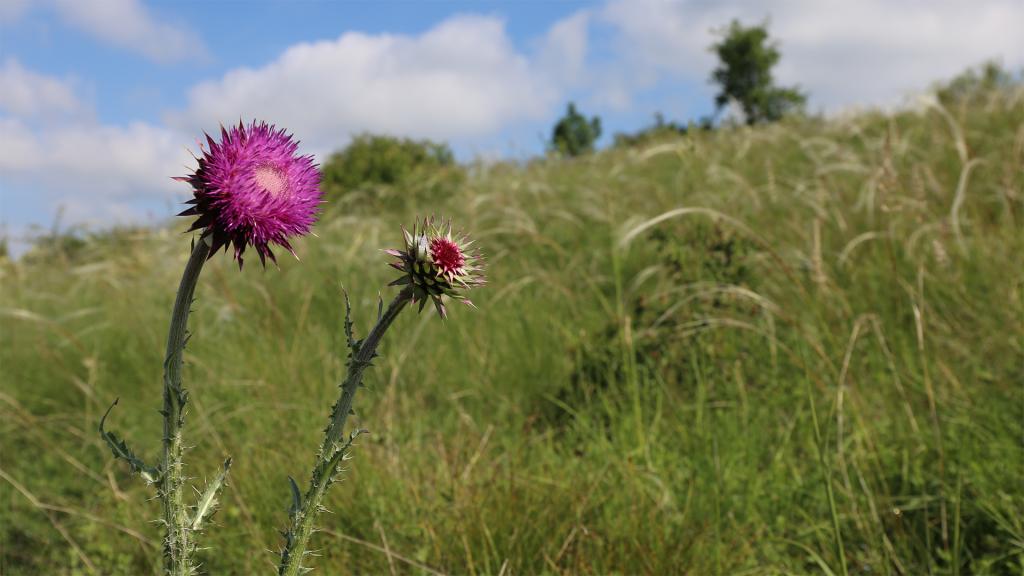
The fifth round of “The Secrets of Grasslands” photo contest draws attention to the beauty and diversity of grasslands. In the landscape category, participants are invited to present the charm and rich variety of grasslands from a broader perspective. A separate category was announced for showcasing the seasonal transformations of grassland habitats. We spoke with Bertalan Balczó, Deputy State Secretary of the Ministry of Agriculture, agricultural engineer, and chair of the jury, about the themes of the contest and the role of grassland protection, which lies at its core.
What is the significance of Hungary’s grasslands and grassland habitats?
The temperate-zone natural grasslands in Hungary are among the most endangered ecological systems, characterized by remarkable biodiversity. In some cases, the number of plant species in grasslands can far exceed that of forests. Grasslands occur in a wide range of forms — from sandy and saline steppes to forest-steppe mosaics, floodplain meadows, hilly pastures, mountain hay meadows, and rocky grasslands. Our grasslands play a crucial role not only in nature conservation but also in climate protection.
They are vital components of the water and nutrient cycles and possess a carbon sequestration capacity comparable to that of forests. They act as significant carbon sinks, storing large amounts of carbon dioxide below the surface in the form of humus. In doing so, they play an important role in climate regulation, infiltrating water purification, and preventing erosion.
By applying appropriate land management practices, the ecological condition of grassland areas — and thus their ecosystem services — can be greatly improved, which in the long term may also result in economic benefits. Even non-protected grasslands can be of high conservation value. The preservation of the unique wildlife of grassland types found in the Pannonian Biogeographical Region is primarily Hungary’s responsibility. The Pannonian saline steppes, sandy and loess grasslands represent unique natural assets, and been recognised as habitats of community importance since Hungary’s accession.
What role do Hungarian grasslands play in biodiversity?
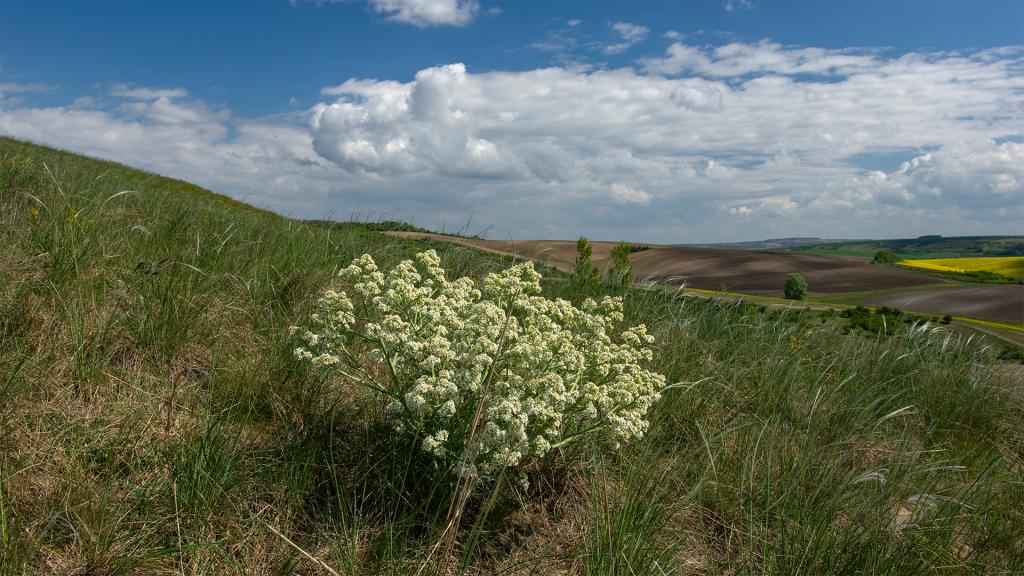
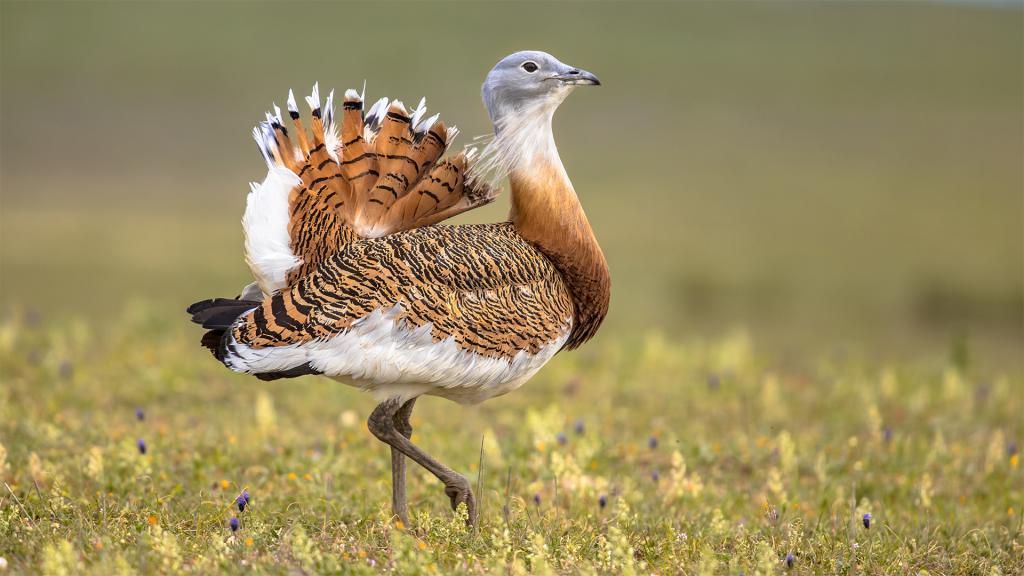
Due to its geographical position, the Carpathian Basin represents a meeting point of several phytogeographical regions — Asian (steppe), Balkan, Western and Northern European. This is particularly evident in the diversity and biodiversity of the region’s grasslands. Alongside wetlands and forests, grasslands constitute the third major ecosystem group in Hungary. Whether marsh meadows or loess grasslands, these habitats play an outstanding role in maintaining biodiversity and serve as habitat for numerous natural assets. Particularly noteworthy are the Pannonian grassland types — saline steppe and loess grasslands — which occur only sporadically farther west. Consequently, many Eastern Palaearctic plant and animal species reach their western distribution limit in Hungary. Among plants, the strictly protected Crambe tataria (Tatarian sea kale) is one such example, surviving in isolated loess patches, while the Hungarian pasqueflower (Pulsatilla flavescens) is a true endemic species found in several parts of the Great Hungarian Plain. Among birds, several strictly protected species reach their distribution limits here, including the Asian Imperial Eagle (Aquila heliaca) and the Collared Pratincole (Glareola pratincola). Thanks to decades of conservation efforts, Hungary now supports a steadily increasing population of the Great Bustard (Otis tarda) — the world’s heaviest flying bird species.
What natural assets (plants & animals) can be found in grassland habitats?
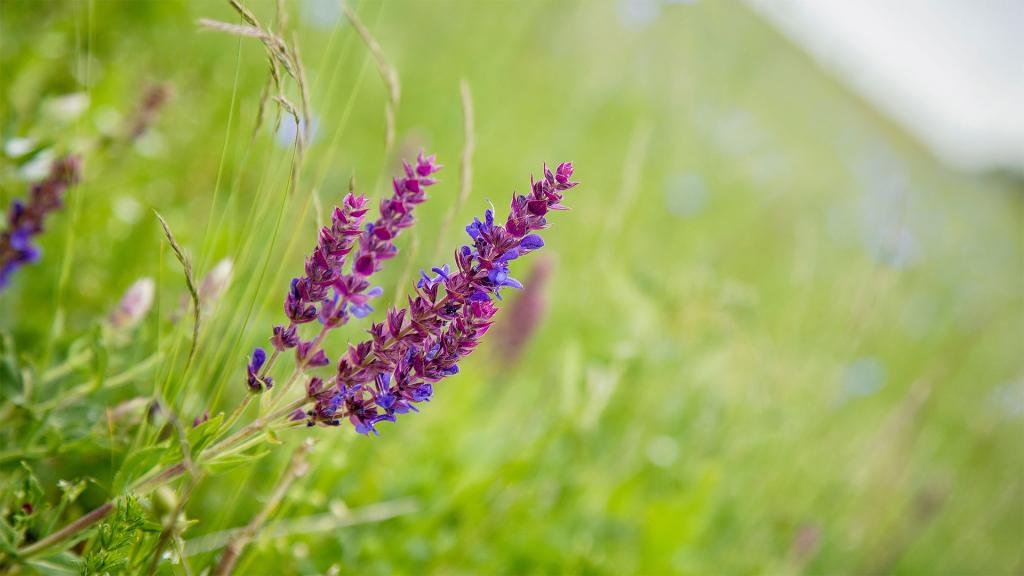
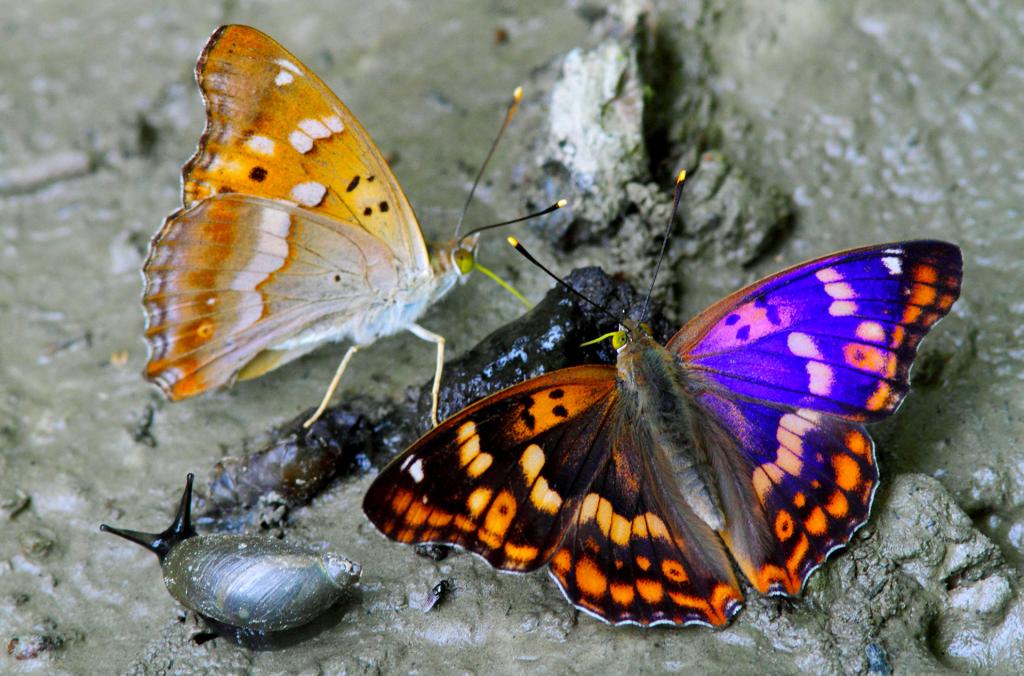
Grasslands host roughly three-quarters of Hungary’s protected plant species and half of its protected animal species. Wildflower-rich grasslands serve as essential foraging habitats for pollinators, not only for bees but also for many other pollinating insects. Many butterfly species depend exclusively on grasslands because they require specific host plants that are found only in these habitats. Characteristic plants of the Hungarian plains include feather grasses (Stipa spp.), nodding sage (Salvia nutans), and meadow gladiolus (Gladiolus imbricatus). Among animals, unique species such as the Hungarian birch mouse (Sicista trizona) — found only in the Carpathian Basin — and the wrinkled darkling beetle (Probaticus subrugosus), various blue butterfly species (Lycaenidae), European ground squirrels (Spermophilus citellus), and mole rats (Spalacinae) can be found here.
What are the main research and monitoring tasks concerning grasslands?
Assessing and monitoring the extent, naturalness, and condition of grasslands, as well as mapping those of community importance, helps to set conservation priorities and underpin protection measures. Monitoring of high-priority grassland communities is conducted under the National Biodiversity Monitoring System, which also encompasses certain species groups associated with grasslands, including butterflies and orthopterans. Trends observed in these groups provide valuable insight into the state and changes of grassland ecosystems. Within an EEEOP project (Environmental and Energy Efficiency Operational Programme), the Ecosystem Map of Hungary has been completed. This initiative includes the development of grassland condition assessment methodology and national-scale maps for a country-level overview.
The Grassland-HU LIFE integrated project aims to ensure the long-term conservation of Pannonian grasslands and related habitats. How can the photo competition contribute to grassland protection?
The large-scale GRASSLAND-HU LIFE Integrated Project launched in January 2019 supports the implementation of Hungary’s National Natura 2000 Prioritised Action Framework (PAF). One key goal is the preparation of a Strategic Plan for Hungarian Grasslands, being developed in cooperation with all relevant sectors, to support the long-term conservation and restoration of grasslands. This strategic plan will also contribute to the forthcoming National Nature Restoration Plan, making this component particularly important for the Ministry of Agriculture. Within the project framework, a grassland conservation management advisory service provides guidance to farmers managing lands on Natura 2000 sites about best practices in nature-friendly management, available agri-environmental supports, and relevant obligations. Other project action contributes to the protection of species of high conservation importance associated with grasslands by supporting the preparation and revision of species conservation plans. In addition to nationwide measures, on-site conservation actions are also being implemented — such as establishing infrastructure for grazing, shrub clearance, and the control of invasive alien species. A national invasive species database is also being developed to support conservation authorities with data on the distribution and management of invasive species. With a total budget of EUR 17.3 million and a duration of eight years, this integrated project is implemented through broad cooperation among numerous partners. And as such make substantial contribution to the conservation of Hungary’s valuable grassland ecosystems.

Forests are often mentioned in the context of climate protection — but what about grasslands?
The carbon sequestration capacity of grasslands is broadly comparable to that of forests, and on dry sites it may even surpass forests. In grassland ecosystems, a large portion of carbon is stored in the soil, making it a key component of the global carbon cycle. The sequestration capacity depends strongly on water availability and management practices. Under favourable hydrological conditions and extensive grazing practices, grasslands function as effective sinks for greenhouse gases. According to a background study for the EU Nature Restoration Regulation, agricultural and grassland habitats covering approximately 4.3% of the EU’s territory, if restored to good condition, could sequester around 13.7 million tonnes of carbon, equivalent to about 50 million tonnes of CO₂.
Do you take nature photographs? Which grassland is your favourite?
When spending time in nature, I usually prefer hiking and other forms of active recreation. I occasionally capture a few moments with a camera, but I mostly preserve these experiences and places in my memory.. As for favourite sites, I must admit a personal bias: the dolomite rocky grasslands of the Buda Hills, near my home, are particularly dear to me. During the flowering of the spring adonis (Adonis vernalis), these grasslands are truly breathtaking.