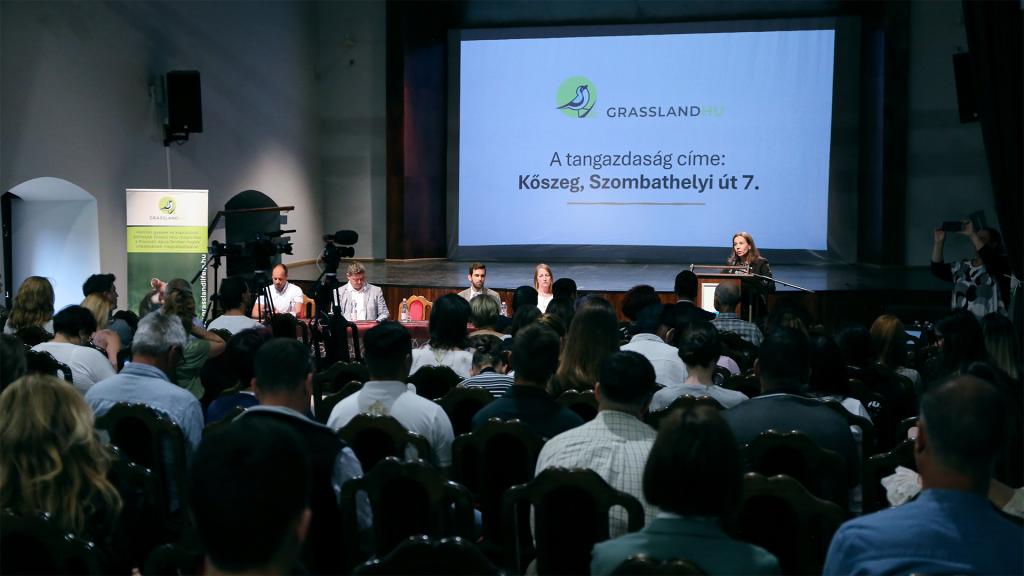
Hungary’s grassland ecosystems play a crucial role in the country’s natural heritage. Three-quarters of protected plant species and half of protected animal species are associated with these habitats, said Bertalan Balczó at the opening event of a series of model farm demonstrations launched under the Grassland Project in Kőszeg. The Deputy State Secretary for Nature Conservation added that the Project plays a key role in the long-term preservation of domestic grasslands.
Hungary’s grasslands—natural and semi-natural habitats within the Pannonian biogeographical region—rank among the most valuable natural assets of the Carpathian Basin. They are of exceptional importance not only for biodiversity conservation but also for climate protection and sustainable agriculture. Bertalan Balczó, Deputy State Secretary responsible for nature conservation, highlighted the vital role these grasslands play in maintaining biodiversity.
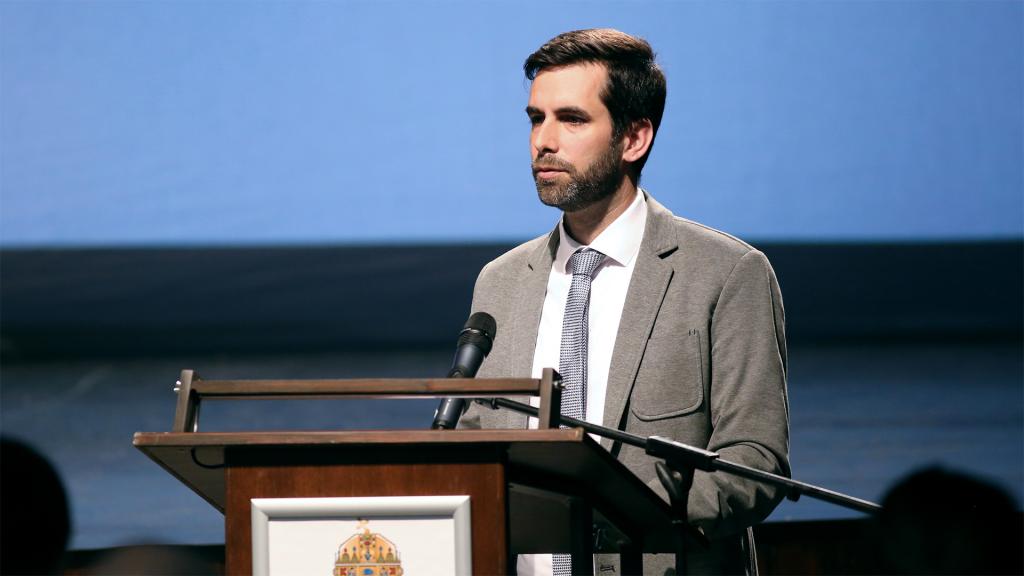
Referring to last year’s report by the Intergovernmental Science-Policy Platform on Biodiversity and Ecosystem Services (IPBES), the Deputy State Secretary stressed that key areas cannot be managed in isolation. The biodiversity of grasslands—and changes within it—have far-reaching implications for ecosystem functioning, water availability and quality, food security, and the health of humans, flora and fauna, as well as for resilience to the impacts of climate change.
Last year, a total of six model farms were selected from across the country by partner organisations involved in the Grassland-HU LIFE Integrated Project, coordinated by the Herman Ottó Institute Nonprofit Ltd. The aim is to make nature-friendly grassland management tangible and accessible through real-life examples. The model farms chosen so far—including the training farm of the Lutheran Secondary School of Kőszeg—apply practices that align grassland use with the conservation of natural values.
Zita Zsembery, the project manager, explained that the initiative seeks to showcase grassland management approaches that are not only environmentally sustainable but also economically viable. Close cooperation with farmers is among the cornerstone of the project, she added, as effective grassland management cannot be achieved without their active involvement.
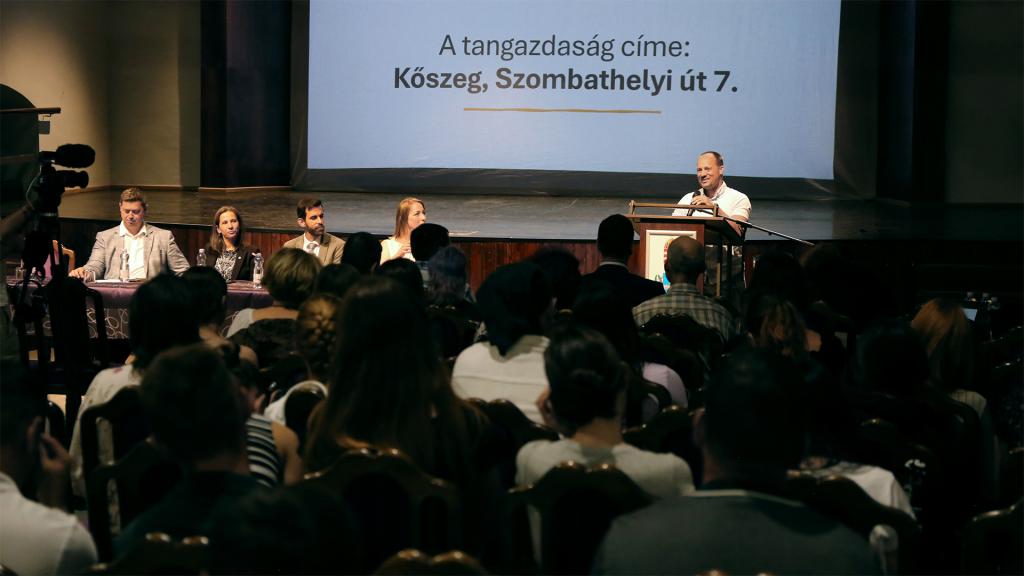
Zsombor Wagenhoffer, Head of the Animal Husbandry and Supplier Industry Department of the Hungarian Chamber of Agriculture, emphasised that pasture-based livestock farming remains a central commitment. “Grasslands serve as a link between different agricultural sectors,” he noted. He added that a nationwide survey conducted in 2022 revealed that, although 53% of the 1,000 farmers surveyed practise grazing, relatively few undertake grassland conservation measures, and the replenishment of organic matter is often neglected. This, he stressed, underlines the importance of the newly launched model farm demonstration series programme.
“We have always known that if there is a place in the western part of the country, then Kőszeg must be represented in the Grassland Project,” said Béla Básthy, Mayor of Kőszeg. He added that local knowledge of natural endowments and historical heritage alone is not sufficient without individuals who can translate these assets into tangible results through their work in the present. In this spirit, he expressed his gratitude to the Lutheran Secondary School of Kőszeg and, in particular, to Szabolcs Nagy for their commitment in bringing the town into the project.
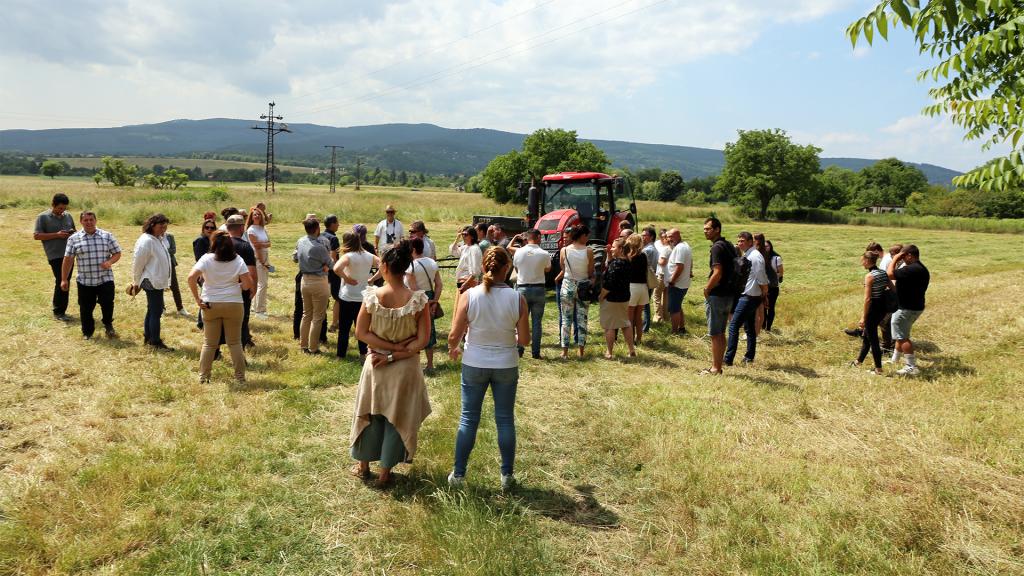
Following presentations held at Jurisics Castle, participants were given the opportunity to gain first-hand insight into nature-friendly mowing techniques during a field demonstration at the training farm of the Lutheran Secondary School of Kőszeg.
Source: Herman Ottó Institute Nonprofit Ltd.