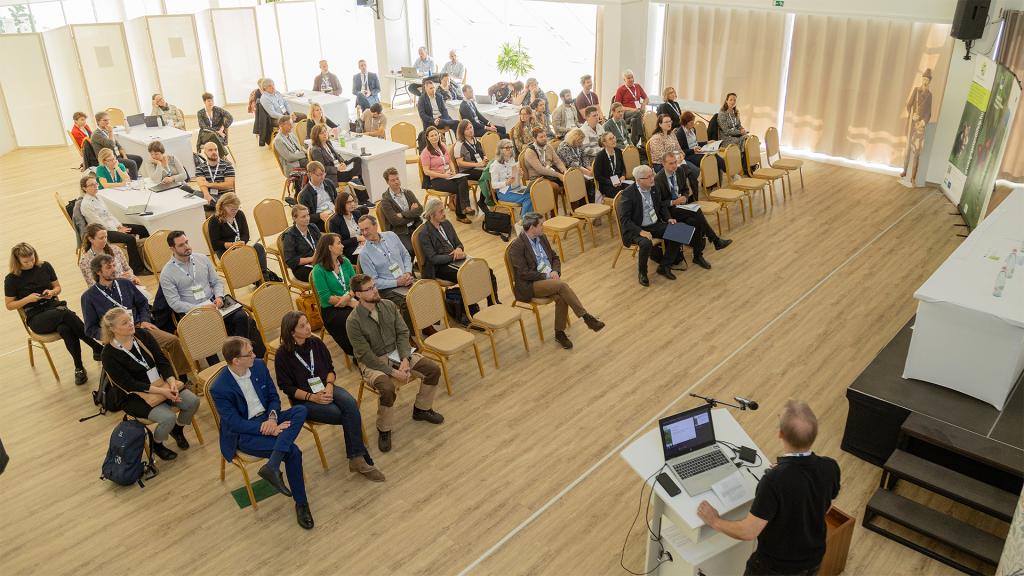
A three-day international scientific conference entitled “Restoration of Europe’s Threatened Grasslands” was organised by the Herman Ottó Institute Nonprofit Ltd. as part of the Grassland-HU LIFE Integrated Project, in cooperation with the European Commission and the Hungarian Ministry of Agriculture.
The event aimed to foster knowledge exchange at a European level on grassland restoration, while supporting biodiversity conservation and promoting sustainable land use. During this forum the discussions focused on key issues such as financing and planning restoration efforts, the management of Natura 2000 sites, and the development of national nature restoration plans.
Humberto Delgado Rosa, Director for Biodiversity at the European Commission’s Directorate-General for Environment, and Andrea Vettori, Head of Nature Conservation, emphasised the vital role of grassland ecosystems in sustaining communities. They highlighted the importance of traditional grazing practices in maintaining ecological balance and supporting biodiversity.
According to Gábor Magyar, Head of the Nature Conservation Department at Hungary’s Ministry of Agriculture, the Grassland-HU LIFE Integrated Project serves not only as a strategic planning instrument but also as a cornerstone for practical conservation action. By showcasing successful solutions and best practices, the initiative seeks to inspire wider adoption of effective conservation measures, he noted.
Key aspects of national restoration planning were presented by Frank Vassen of the European Commission’s Directorate-General for Environment. His presentation addressed what should be restored, to what extent, and where interventions are most needed, as well as how to ensure the long-term sustainability of restoration measures. He pointed out that while forest ecosystems are generally improving, grasslands, dunes, bogs and marshes continue to decline, making their conservation and restoration a pressing priority.
The conference plenary sessions were organised around four main themes, followed by panel discussions and thematic workshops. These themes included the current state of national grassland restoration planning, the role of the Common Agricultural Policy (CAP) in grassland restoration—both now and beyond 2027—the conservation status and favourable reference values of grassland habitats, and the prioritisation and planning of restoration measures.
As part of the programme, participants attended a field visit to the Kiskunság National Park Directorate, where they gained first-hand insight into Hungary’s grassland management practices and challenges. The excursion also introduced several protected species of high conservation importance native to the region, including the Hungarian meadow viper (Vipera ursinii rakosiensis) and the great bustard (Otis tarda), along with ongoing conservation efforts.
The conference brought together representatives from national and regional authorities and agencies responsible for nature conservation and agriculture across approximately 20 EU Member States. It provided a valuable platform for professional dialogue, the exchange of best practices, and the strengthening of European cooperation to safeguard the future of grassland ecosystems.
Source: Herman Ottó Institute Nonprofit Ltd.
Photo: Melinda Réti-Michalkó