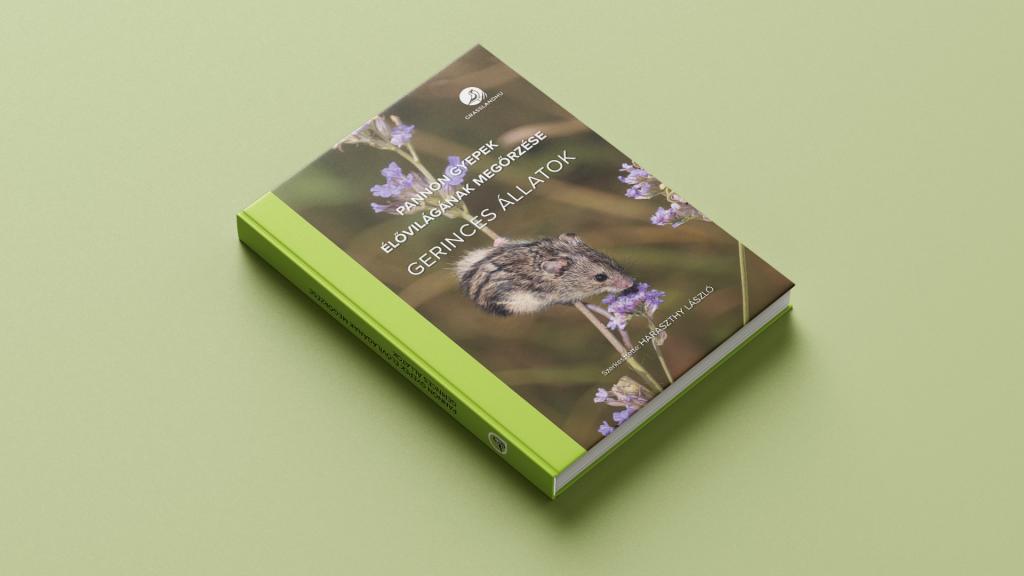
The first volume of the Conserving the Wildlife of the Pannonian Grasslands book series has been published as part of the Grassland-HU LIFE Integrated Project, coordinated by Herman Ottó Institute Nonprofit Ltd.. Focusing on vertebrate species, the publication not only provides a comprehensive overview of grassland wildlife, but also serves as a practical guide for land managers and farmers.
The uniqueness of the Pannonian grasslands lies not only in their exceptional biodiversity, but also in the centuries-old farming traditions that have shaped their present-day appearance while sustaining rural livelihoods. Many species successfully adapted to traditional forms of land management; however, the increasing mechanisation brought about by the Industrial Revolution has posed significant challenges to grassland ecosystems. These pressures inspired the launch of the Grassland-HU LIFE Integrated Project, under which the Conserving the Wildlife of the Pannonian Grasslands series is being published.
Farmers as Custodians of the Landscape
Grassland management has played a vital role not only in shaping the landscape and its wildlife, but also in maintaining the ecological systems that developed over time. Deviations from traditional management — whether through overly intensive interventions, the absence of management, or poorly timed practices — can have damaging effects on the natural values of grasslands.
The newly released series, aimed primarily at land managers and practitioners, offers insight into this highly sensitive and complex network of ecological relationships. In addition to highlighting activities that threaten wildlife, the volumes also present management practices that can help preserve the natural treasures of the Pannonian grasslands.
Structure and Content: A Practical Handbook Rather Than a Scientific Catalogue
Edited by László Haraszthy, the volume examines vertebrate species according to zoological classification. Alongside amphibians, reptiles and mammals, the most extensive section is devoted to birds, reflecting the outstanding importance of grasslands for bird conservation.
Within each group, the publication introduces not only rare and protected species — such as the Hungarian meadow viper (Vipera ursinii rakosiensis) and mole rat species — but also more widespread animals that play an essential ecological role in grassland habitats, including the Common vole (Microtus arvalis) and Wild boar (Sus scrofa).
One of the book’s greatest strengths is its strong practical focus. Species accounts begin with an assessment of conservation importance, followed by information on habitat, behaviour and distribution. These sections provide the basis for identifying threats and outlining recommended management measures necessary for species conservation. The clear taxonomic structure and consistent layout make the volume easy to use, allowing readers to access management-related information quickly and efficiently. Numerous colour photographs further enrich the publication.
Who Is the Publication Intended For?
The publication aims to broaden the professional knowledge of everyone involved in grassland management by presenting both wildlife conservation issues and appropriate management techniques. Its target audience includes farmers, conservation professionals, water management and forestry experts, as well as responsible staff working for the military, road management authorities and railway companies.
The publication is available free of charge as a downloadable PDF from the project’s official website, while printed copies can also be requested free of charge through regional representatives of the Grassland Conservation Management Advisory Service.
Title: Conserving the Wildlife of the Pannonian Grasslands – Vertebrate Animals
Editor: László Haraszthy
Publisher: Herman Ottó Institute Nonprofit Ltd.
Project: Grassland-HU LIFE Integrated Project
Source: Herman Ottó Institute Nonprofit Ltd.