One significant side effect of globalization—particularly international trade and tourism—is the intensifying biological invasion, during which certain organisms arriving from distant lands not only establish themselves in our country but, by proliferating in massive numbers, transform our natural environment. This process has a negative impact not only on our natural heritage but often on agricultural management as well.
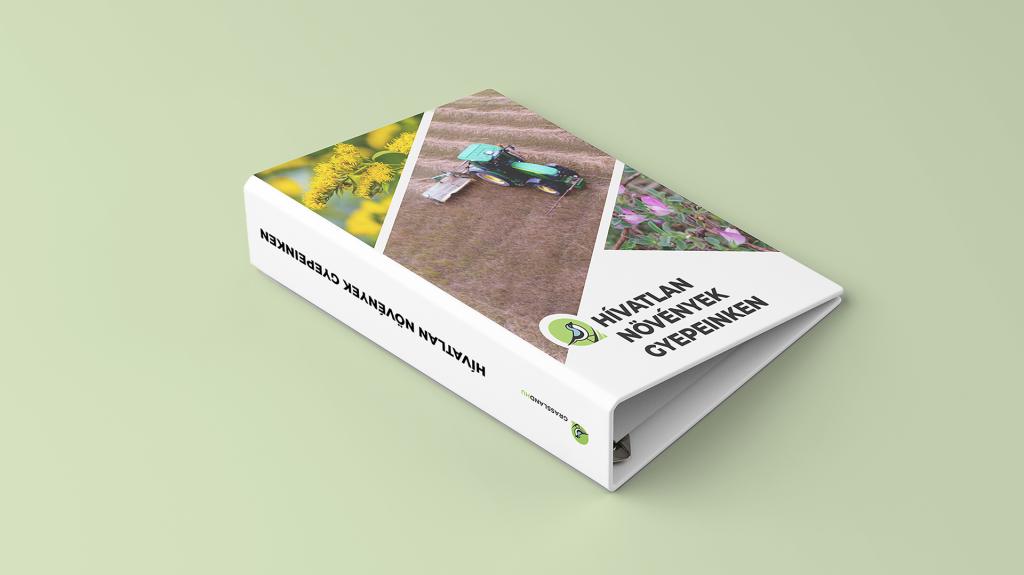
The publication titled Uninvited Plants in Our Grasslands was produced within the Grassland-HU LIFE Integrated Project, which aims for the long-term conservation of grasslands. Written for grassland management professionals and farmers, the authors provide brief and practical guidance on acting against invasive alien plant species. The first general section summarizes essential knowledge regarding invasive species and potential management methods. It presents the conservation-oriented application of grazing and mowing on Natura 2000 grasslands, as well as relevant legislation, highlighting elements important from a farming perspective.
In the second part, the authors introduce the most significant invasive alien plant species threatening the natural values of grasslands, along with the protection and management methods applicable against them. The most emphasized part of the species descriptions—illustrated with numerous photographs to aid identification—is the presentation of management techniques applicable to each species, which also helps in selecting the appropriate timing for treatment. Beside well-known species such as Canada goldenrod (Solidago canadensis) or tree of heaven (Ailanthus altissima), the publication includes species that the public does not yet recognize as invasive, such as prickly pear cacti (Opuntia spp.) or Tall Wheatgrass Cultivar ‘Szarvasi-1’ (Elymus elongatus subsp. ponticus cv. ‘Szarvasi-1’), as well as species that carry significant health risks, like common ragweed and giant hogweed (Heracleum mantegazzianum).
The third part offers short descriptions of species that are at the beginning of their invasion in the country; through early detection and rapid response, their large-scale spread can still be prevented.
Published by the Herman Ottó Institute Nonprofit Ltd., the goal of the document is to provide farmers, conservation professionals, and all interested parties with useful, intelligible, and easily applicable knowledge for the preservation of grasslands and the protection of biodiversity. The publication is available for free download in PDF format from the project’s official website or can be requested free of charge in printed form from the regional representatives of the Grassland Advisory Service.
Uninvited Plants in Our Grasslands makes us realize that preserving biodiversity requires active intervention. Readers now have a comprehensive, practical guide in their hands, which is valuable for anyone who considers the protection and passing on of our country’s natural values to future generations important.
Source: Herman Ottó Institute Nonprofit Ltd.