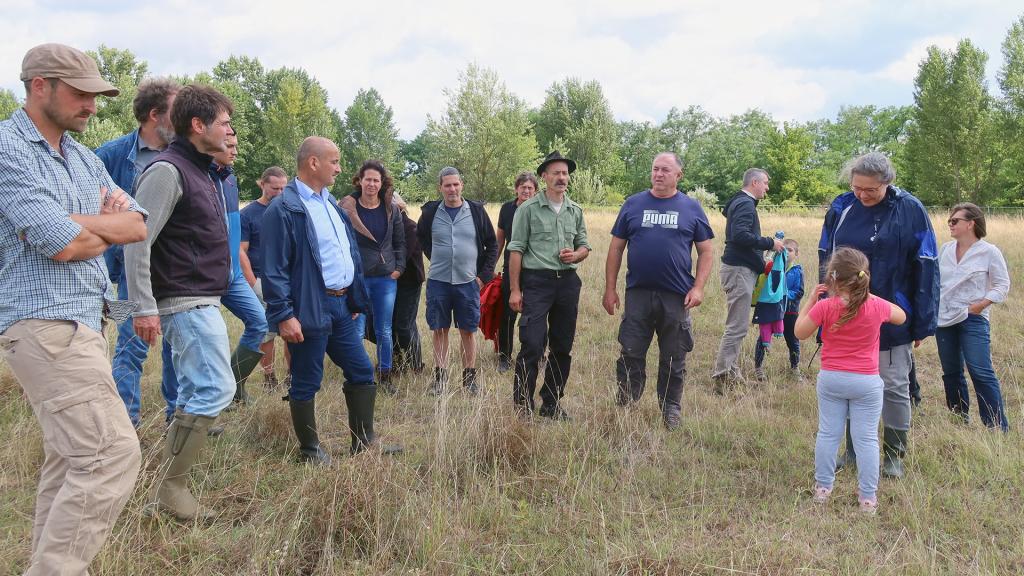
At the latest stop of the model farm demonstration series of the Grassland-HU LIFE Integrated Project, farmers were introduced to the practical implementation of sustainable livestock management at the farm of Róbert Barth. The event served as an excellent example of how nature-based farming can contribute to the wider adoption of sustainable agricultural practices in Hungary.
The professional field day, organized within the framework of the Grassland-HU LIFE Integrated Project, aimed to present the practical aspects of nature-friendly livestock management systems, with a particular focus on sustainable grassland management. At Mr Barth’s farm, participants gained insight into the implementation of controlled (targeted) grazing, with emphasis on regenerative livestock management and grassland practices tailored to local conditions.
The first part of the program took place at the Edvy Mill in Pápa, where Róbert Barth presented the professional foundations of controlled grazing. He described his own system, compiled from several methods and well-suited to Hungarian conditions. He also provided a detailed overview of his farm, which covers approximately 50 hectares of undulating terrain interspersed with ditches and groves, where he keeps Hungarian Simmental cattle. The herd consists of about 15 animals, which remain on pasture year-round, even during cold weather. Grazing management has an emphasis on careful planning of grazing cells/adaptive grazing units, regular movement of livestock, and water supply—assisted by a pack of herding dogs.
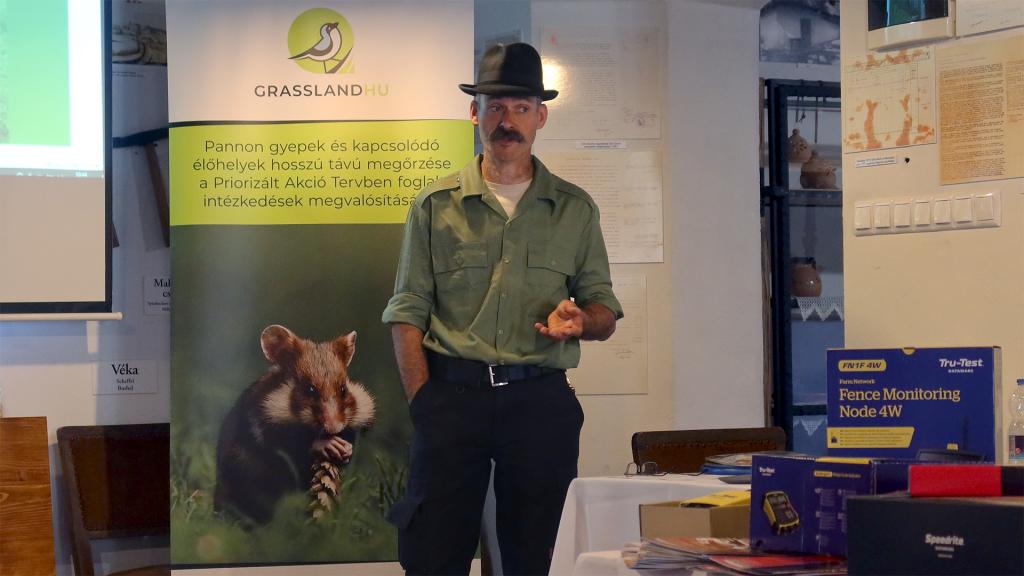
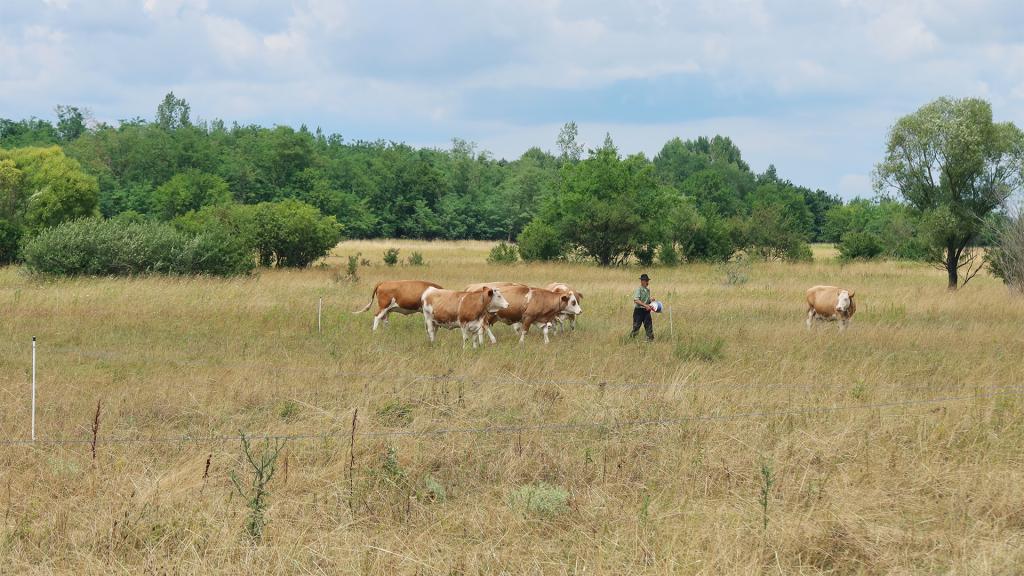
The principle of the presented controlled grazing system lies in adaptive rotation. Cattles graze in temporarily fenced grazing cells and then moved to the next section of enclosed area. This method allows grass to undergo multiple growth phases, supporting vegetation regeneration and maintaining soil fertility. Grazing is timed according to grass development; one rule of thumb is to graze when the potential vegetation reaches 25 cm in height or the three-leaf stage.
Maintaining the correct residual height is crucial, leaving at least one leaf or a 10 cm stubble to allow continued photosynthesis. Overgrazing weakens vegetation and can reduce pasture productivity. Equally important is to provide the rest periods: pastures should be rested for about 35 days in spring, 42 days in summer, and up to 60–90 days in autumn to allow full regeneration.
Mr Barth emphasized the importance of avoiding regrazing, which is why he continuously adjusts cell sizes and grazing duration to match plant growth and animal requirements. This approach ensures the sustainable use of pasture and maintaining livestock in good physical condition.
His practical approach also includes regular assessment of manure consistency to evaluate forage quality. Based on the condition of dung pats, he provides supplementary feed when necessary to maintain optimal nutritional status.
Grazing plays a key role in the development of young stock as well, it improves feed utilization and contributes to long-term production performance. When positioning water points, ensure even access for all animals to prevent stress and tension within the herd.
Following Barth’s presentation, invited professional partner József Strasszer, representative of Bentley Hungary Ltd., showcased essential equipment—including electric fencing systems and other modern tools—that enhance grazing efficiency.
The afternoon field session took place at Alsó-major in Pusztagyimót, where participants could observe controlled grazing in practice. The on-site demonstration covered the technical aspects of grazing cell division, livestock movement, water point management, and the broader benefits of nature-based livestock husbandry.
One of the main objectives of the Grassland-HU LIFE Integrated Project is to promote sustainable grassland use in Hungary and to showcase practical, nature-friendly solutions that support farmers in adopting more sustainable practices. These events also provide opportunities for farmers to learn from one another and collaborate in achieving a balanced relationship between agriculture and nature conservation.
Source: Herman Ottó Intézet Nonprofit Ltd.