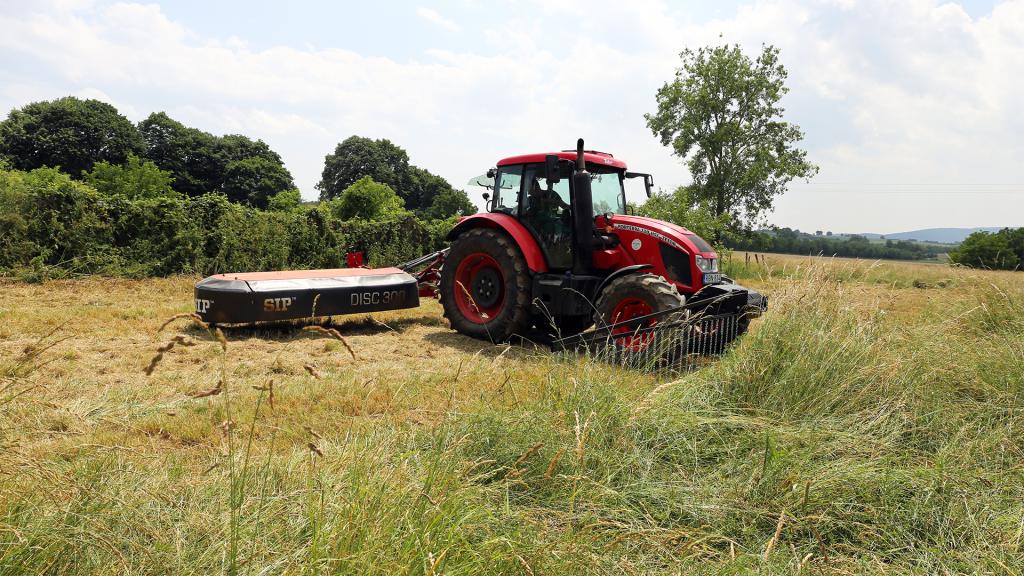
Sustainable grassland management took centre stage in Kőszeg at the first stop of a model farm demonstration event series organized as part of the Grassland-HU LIFEIP Project. Presentations by Szilvia Orosz, Péter Tóth and Szabolcs Nagy highlighted the proper utilization of non-protected grasslands, adoption of nature-friendly practices and the value-based price setting are the key pillars of future agriculture.
Despite their considerable potential for producing high-quality meadow hay Hungary is home to approximately 400 000 hectares of non-protected grasslands, many of which are currently underutilized. As climate change continues to reshape agricultural conditions, the carrying capacity of grasslands is becoming an increasingly important factor, making sustainable and value-adding management practices essential for the sector.
The opening event of the series, coordinated by the Herman Ottó Institute Nonprofit Ltd., featured a presentation by Szilvia Orosz, head of the Feed Analytical Laboratory at Livestock Performance Testing Ltd. In her talk, she emphasized the importance of non-protected grasslands and the role of hay quality in efficient livestock production. Orosz provided a detailed overview of the main quality challenges affecting Hungarian meadow hay, including low protein content and high levels of unfavourable fiber, both of which reduce its nutritional value.
She stressed that the timing of harvest is critical, noting that earlier-cut hay offers significantly better nutritional composition. She also highlighted that proper storage conditions and avoiding soil contamination are essential for maintaining good fodder quality. It is particularly relevant for family farms where a storage shed is a larger investment, however proves to be beneficial on the long run.

In her closing remarks Orosz referred to international examples, proving that the market value of high-quality meadow hay can be increased if farmers adopt a value-based pricing and regularly validate the nutritional composition of their feed.
Péter Tóth, an expert of BirdLife Hungary called attention to the challenges of biodiversity loss in relation to agricultural environment. In recent decades, population of flying insects and farmland bird species have declined significantly– which tendency is clearly noticeable in Hungary as well.
In his presentation Tóth explained that approximately half of Hungary’s grasslands are under some form of nature conservation protection, however the proportion of both protected and non-protected grasslands are decreasing. This is further accelerated by expansion of arable farming, urbanization and infrastructure development.
Agricultural subsidies play an important role in encouraging farmers to adopt environmentally responsible practices. The eligibility criteria for these payments increasingly incorporate nature conservation and biodiversity protection measures. Péter Tóth particularly highlighted the agri-environmental scheme, which offers new opportunities for the preserving natural habitats and promoting sustainable farming. Nonetheless significant challenges remain in aligning regulatory frameworks and practical implementation regarding grasslands.
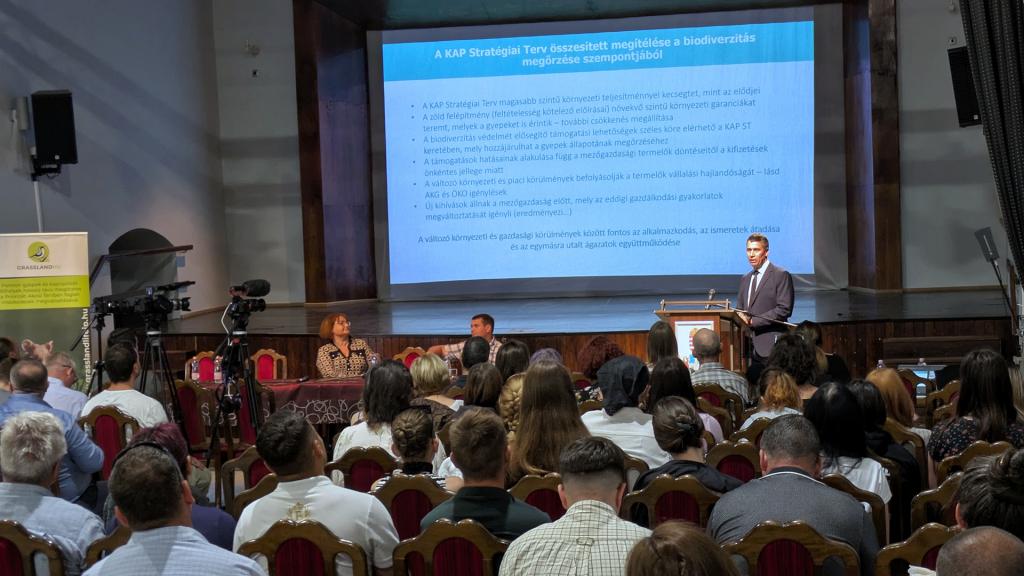
In his final remarks Mr Tóth emphasized that the cooperation between agriculture and nature conservation is key. Only through joint efforts can grassland biodiversity be preserved and their long-term, sustainable use ensured. He noted that through the Natura 2000 network and agricultural subsidy schemes, conservation knowledge now reaches farmers far more effectively than before. This supports compliance with regulations and promotes wider adoption of environmentally friendly practices.
Szabolcs Nagy, head of the training farm of the Kőszeg Evangelical Secondary School, presented in detail the operation of the model farm established within the framework of Grassland-HU LIFE integrated project. The farm manages 70 hectares of arable land alongside 110 hectares of grassland, 90 percent of which is designated as part of the Natura 2000 network.
Mowing activities are carried out in strict compliance with environmental regulations. According to these requirements, mowing is performed at a speed of 8 km/h, using wildlife-scaring chains and applying the so-called flushing (outward) mowing technique to safeguard natural values.
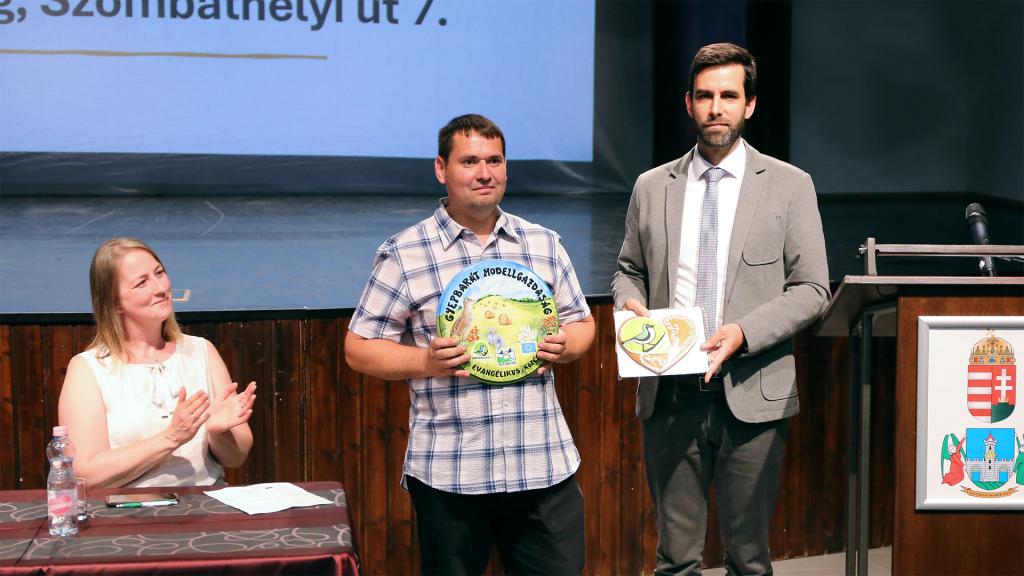
As a result of these practices, the farm has produced award-winning, high-quality hay on three occasions in recent years. In addition to crop production, the farm is also engaged in livestock farming: within its own riding facility, some animals serve breeding purposes, while others are used for vocational training. The aim is to ensure that the farm remains not only an educational site but also economically sustainable and profitable.
During the afternoon field demonstration, Szabolcs Nagy showcased mowing techniques in practice, placing particular emphasis on bird-friendly methods for the participants.
Source: Herman Ottó Institute Nonprofit Ltd.