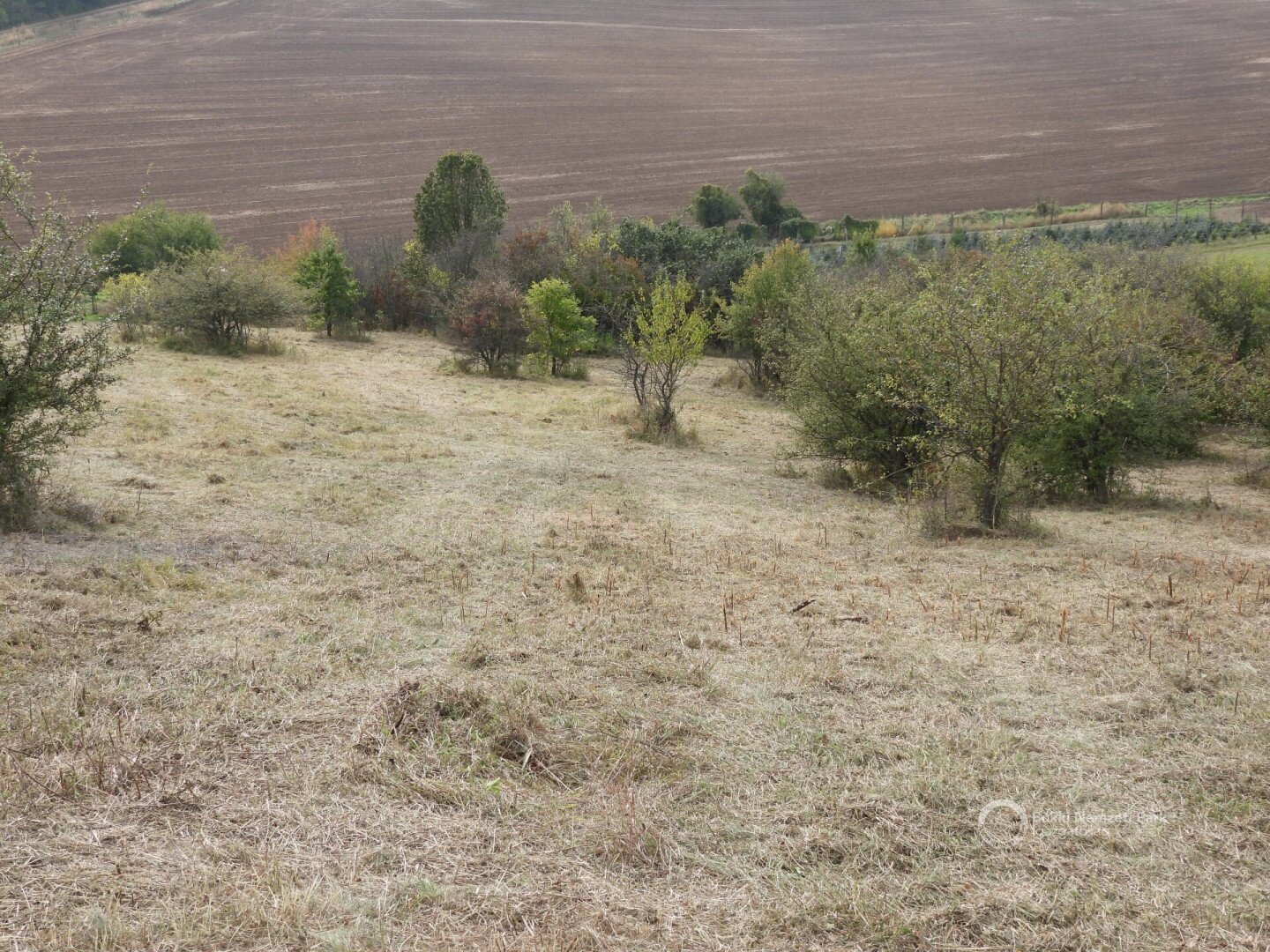
With the support of the European Union, Hungarian partner organisations launched the GRASSLAND-HU LIFE Integrated Project to promote the protection and conservation of Hungary’s grasslands and their wildlife. In connection with this, the staff of the Bükk National Park Directorate carried out habitat-management activities in October as part of a volunteer programme.
This October - known in Hungarian folk tradition as the “sowing month” - proved to be a successful one, as we carried out a four separate grassland-management activities across three project sites, once again freeing substantial areas from unwanted shrubs and invasive plant species.
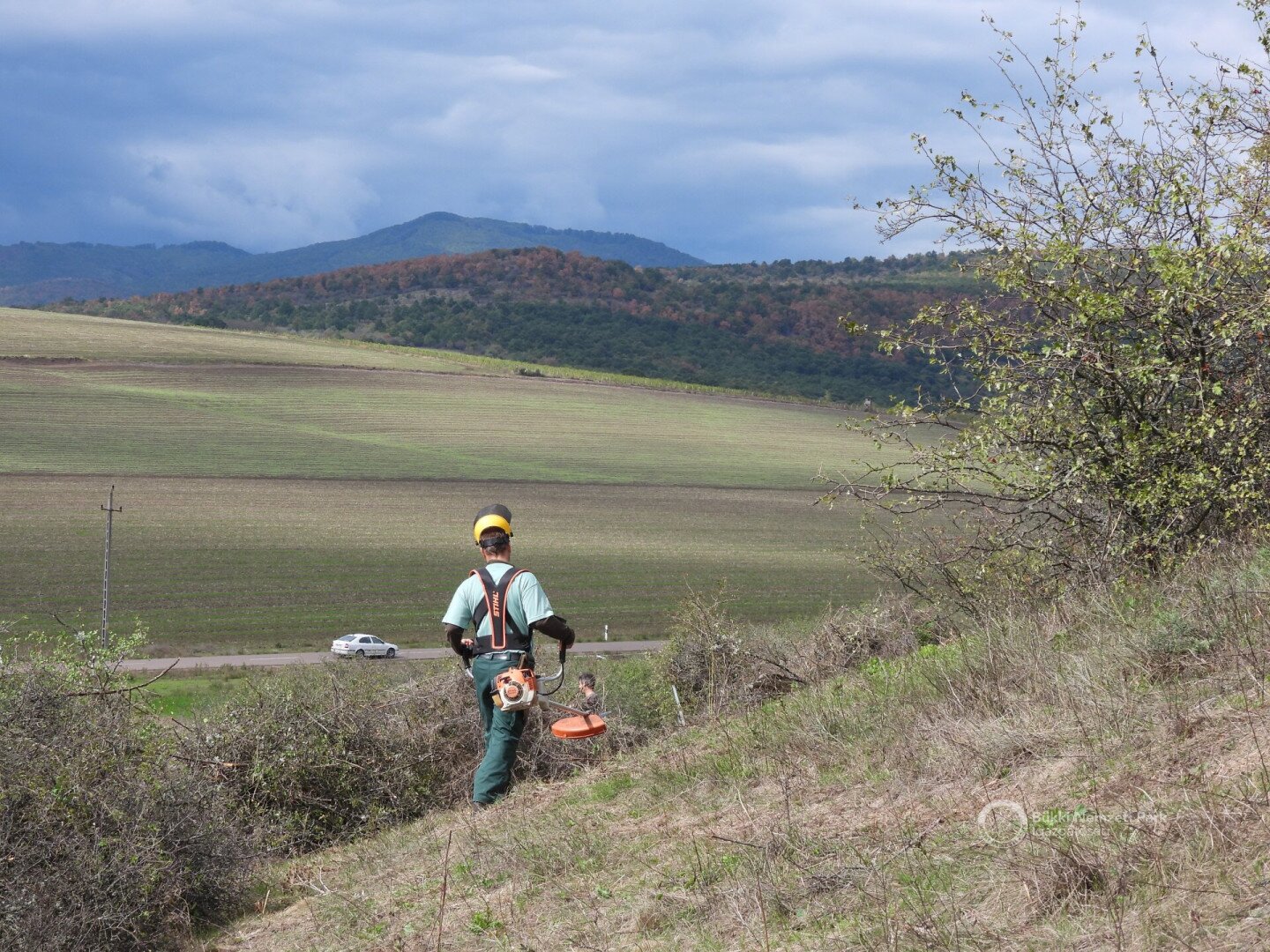
The first such actions took place on the fifth of October, on the Verpelét Vár Hill, where small and large habitat management actions have been carried out by enthusiastic volunteers for more than a decade. This area is notable not only for its geological and botanical values, but also for the fact that, according to lore, a fortress once stood on top of the now dormant volcanic cone, and it was from where the Austrian troops fired on the Hungarians during the battle of 1849. Today, however, it is no longer the neighbours that we must be aware of, but the predominantly native shrubs and tall herbaceous plants that are crowding, suppress or overshadow the protected steppe species which tolerate shade poorly. However, as we explained in last year's article, we do not aim to completely eradicate the shrubs, as they provide habitat for many other protected species. Our goal is to create and maintain a mosaic-like habitat structure with shrub strips and solitary shrub patches.
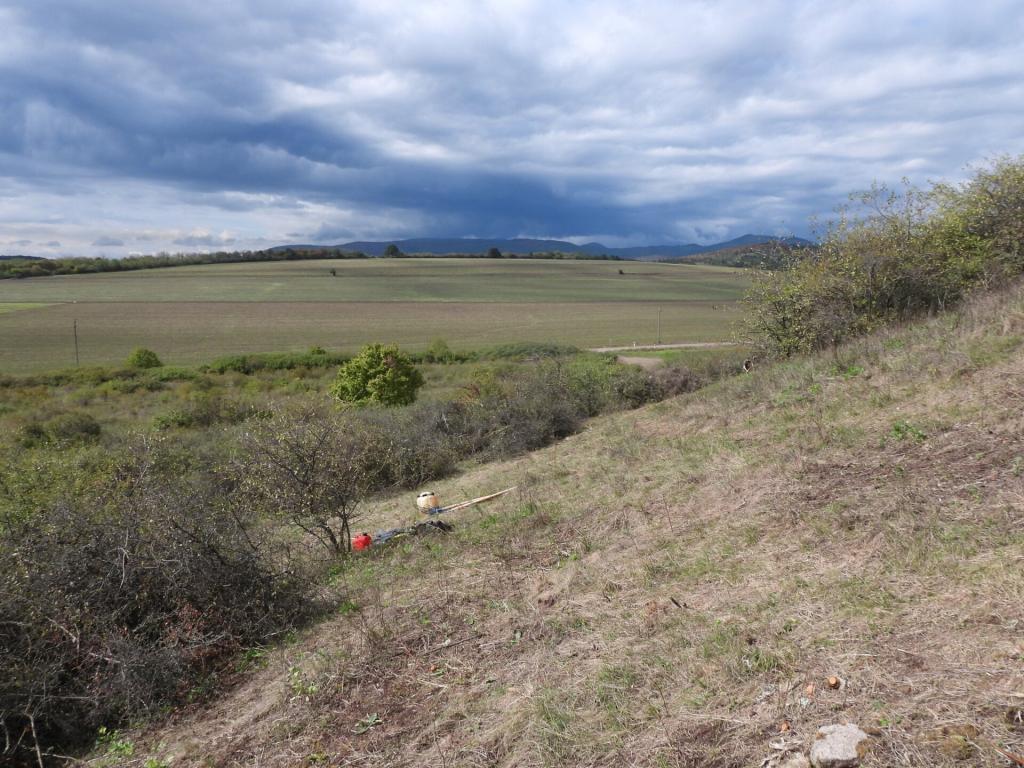
On 24 October, we returned to Vár Hill to clear additional areas and to remove previously cut branches and mown vegetation from the grassland.
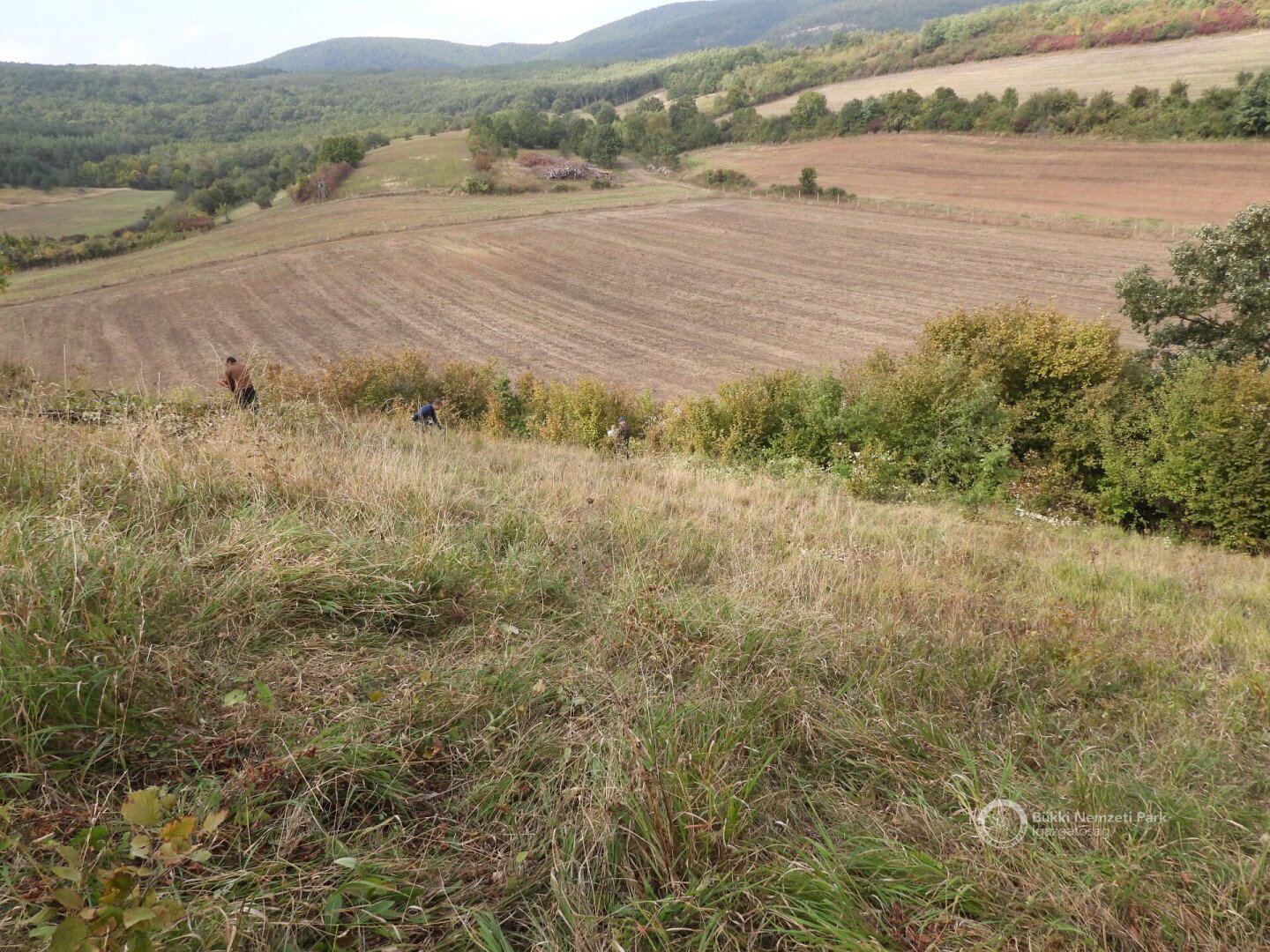
At Bükkzsérc Kerek Hill, visited on 11 October, there may be no fortress, but hosts a very valuable, but disappearing herbaceous plant community. Like many other grasslands, this area was once maintained by mowing and grazing, but in recent years (decades really), in the absence of these, the area has become heavily overgrown with shrubs. So much so that when we visited last year we even had to remove black pines that had outgrown the 'ideal Christmas tree size'. You can read more about that HERE.
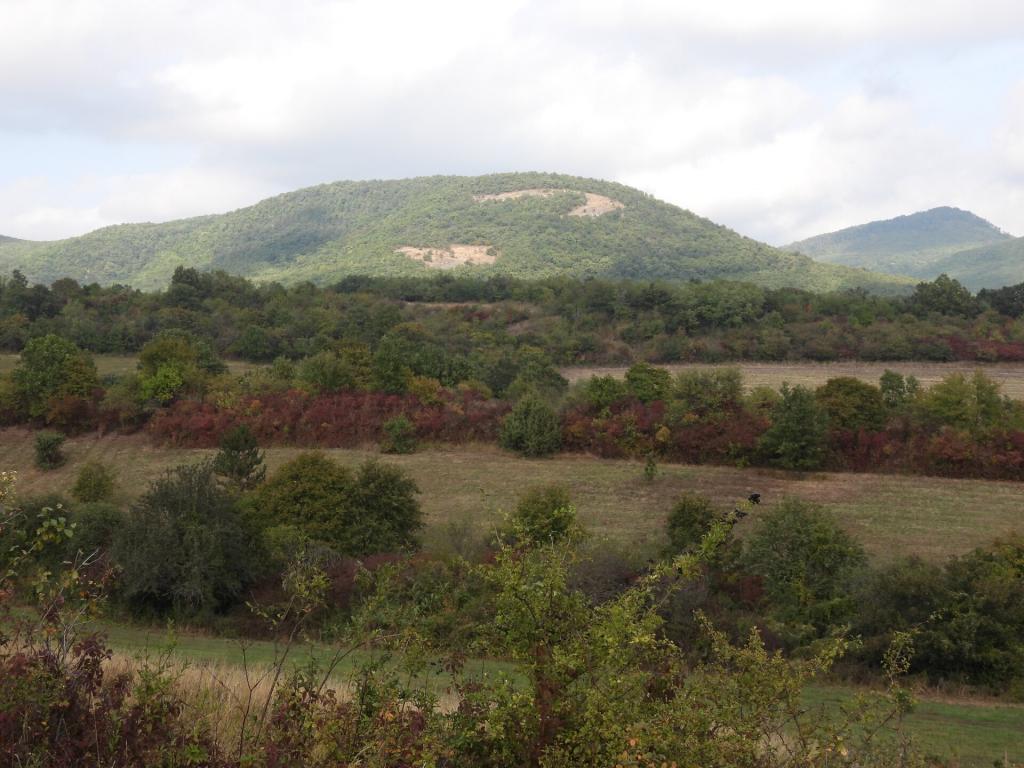
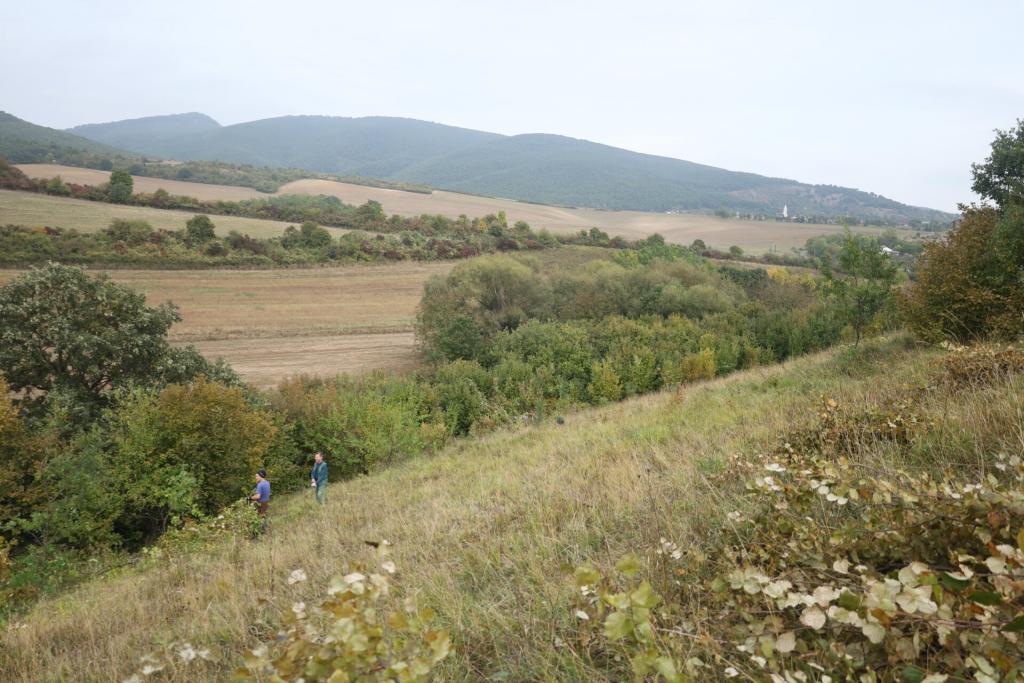
On this occasion, we used a tractor equipped with a flail mower on the smaller part of the area, while on the larger area we used brush cutters, loppers to tackle the hazel, juniper, blackthorn and wild rose bushes. We hope our interventions will help to maintain the remaining herbaceous communities and restore the former grassland by reducing shrub cover.
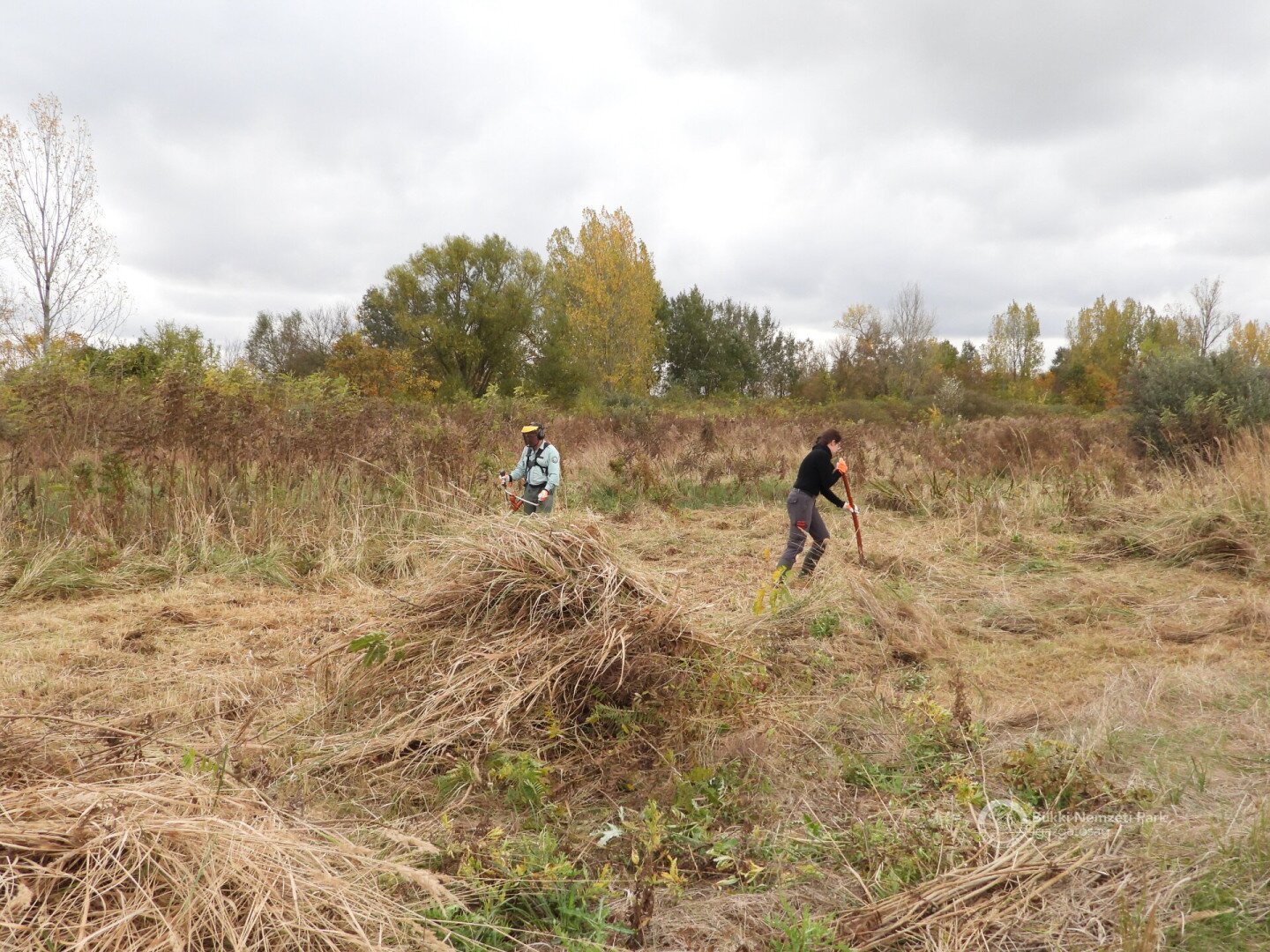
Finally, on 26 October, after completing our work in the Mátra and the Bükk Mountains, we shifted our operations to the Alföld (Hungarian Great Plain), namely to the Borsodi-Mezőség, colloquially referred to asas the "Little Hortobágy". This area is the second largest contiguous protected grassland area in Hungary, which is similar in landscape and wildlife to the well-known Hortobágy, situated on the other side of the Tisza River. For a long time, this area was shaped by traditional grassland farming/management and pasture based livestock husbandry, however over the past century land use has changed significantly, an increasing proportion of grassland being ploughed and used as arable land. This is the case with Such events resulted that the Sulymos flatlands, a marsh meadow located on the outskirts of Tiszadorogma - lying beside the Sulymos main drain, which was built to channel the water from the puszta – now remains the las wet grassland in the region. This marsh meadow is surrounded by extensive plough land and its conservation is one of our highest priority.
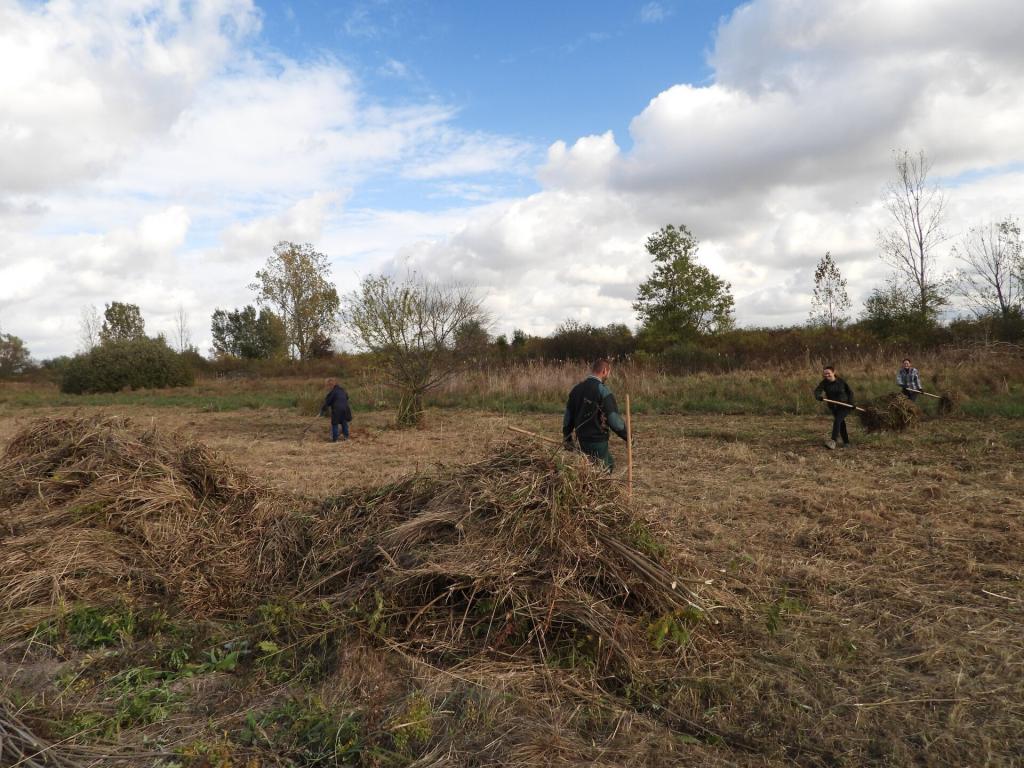
Our work focused on areas of the site where waterlogged ground conditions prevented machinery from entering. Here, therefore, the eradication of encroaching shrubs and the control of invasive plant species was carried out by string trimmer and manual brush removal. The most problematic species in the grassland is the invasive false indigo (Amorpha fruticosa), which was introduced from North America. We previously reported about the seemingly endless battle against the species, can read about it HERE and HERE.
After completing the habitat management work, the participants could also take part in the weekly common crane (Grus grus) count.
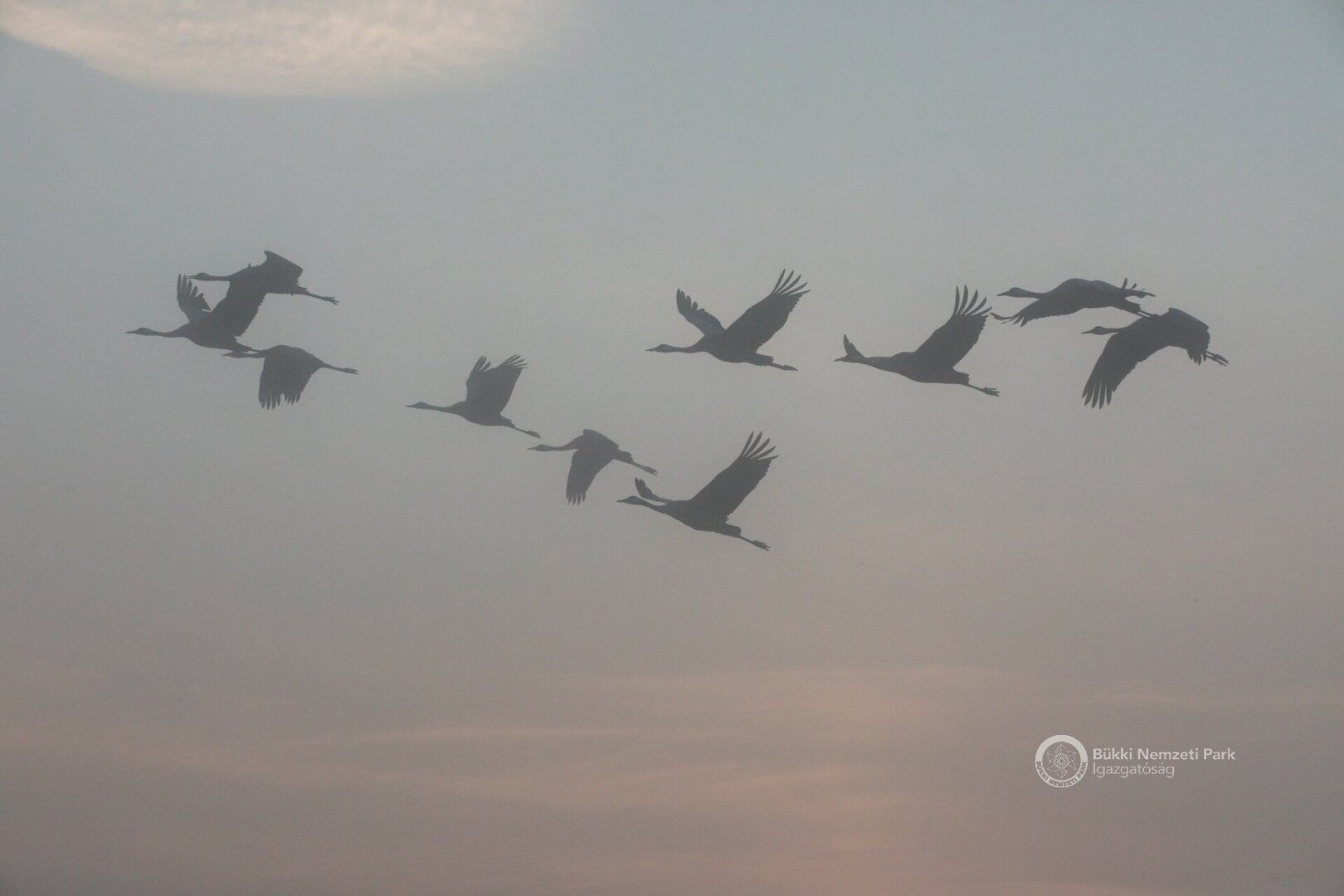
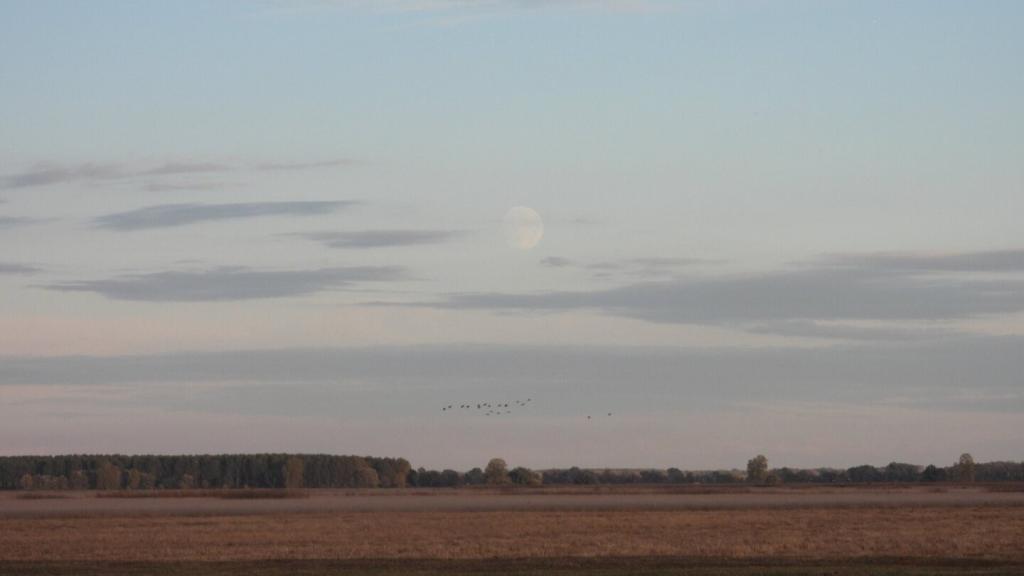
The autumn migration of cranes is among the most spectacular natural phenomena of the season. The sight of large, V-shaped flocks in in the glow of setting sun has become inseparable from the image of the autumnal steppe. Anyone who has been to the Alföld at this time of year has likely witnessed this, or at least heard the unmistakable trumpeting of the cranes from afar.
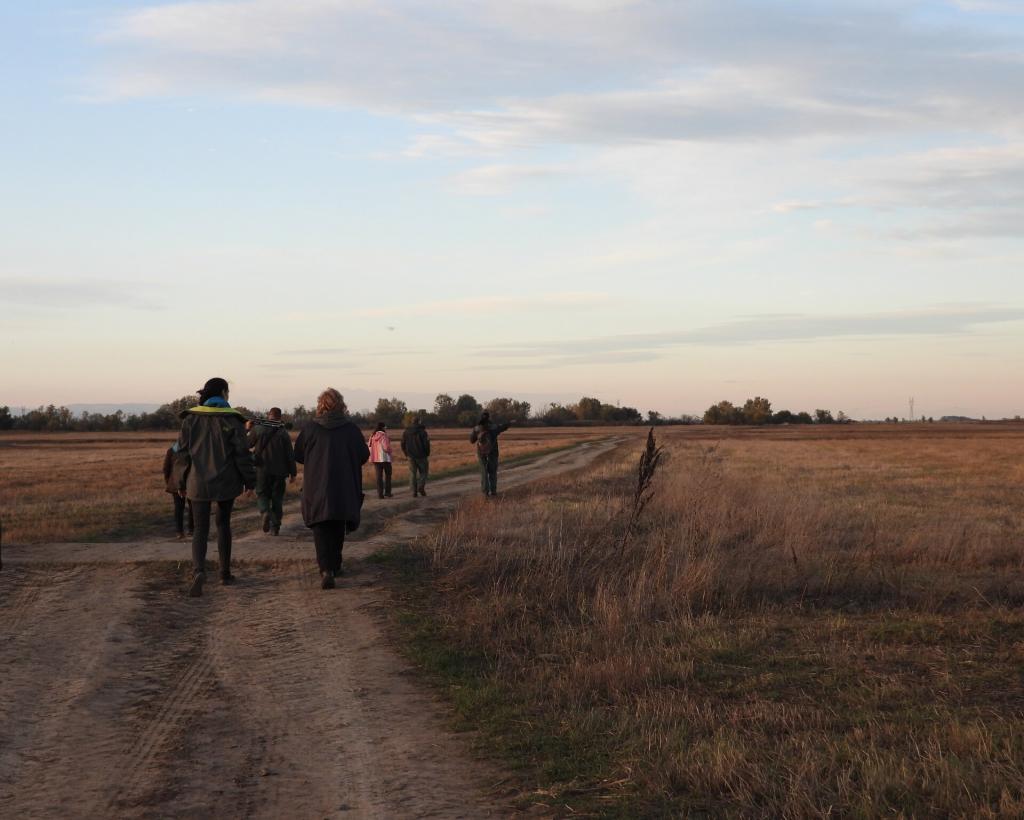
At sunset, the cranes congregate in shallow marshes and drained fish ponds that provide shelter from predators. Conservation wardens and volunteer birdwatchers count the birds at these roosting sites on a weekly basis (usually on Thursdays) from September until the hard frosts set in. During the survey, the observers tipically count the birds flying in to the wetlands around dusk or leaving from at dawn.
When there are multiple observers present, they divide the line of sight between them so that they can estimate the size of incoming flocks with good accuracy. Due to the steady increase in recent years, it is not uncommon to have more than 100,000 birds in Hungary at the same time. We discussed in detail the importance of ensuring undisturbed roosting of cranes in THIS article.
On the evening of the Tiszadorogma habitat management, 12 500 cranes were roosting at the site overnight site!
Finally, we would like to thank all the volunteers and colleagues involved in habitat management activities for their enthusiasm and hard work throughout the year:
János Baczur, Barnabás Barati, Sándor Barati, Attila Bartha, János Bodzás, János Czikora, Zsuzsanna Császár, Tímea Csathó, Gábor Domboróczky, Nikoletta Erdei, Annamária Farkas, Roland Farkas, Andrea Havasi, Anita Herczegné Székely, Evelin Illyés, Tamás Korompai, Lakatos Zoltán, Laufer Zsanett, Magos Gábor, Megyeri Balázs, Mezei János, Nagy Laura, Papp Viktor Gábor, Péntek István, Schmotzer András, Seres Nándor, Stoszek Krisztina, Szögedi Zsuzsanna, Szűcs Erzsébet, Urbán László, Varga Sándorné, Várhelyi-Szomszéd Eszter, Zsupos Vivien.
Photos by Renáta Gál, Attila Kozma, Balázs Megyeri, Nándor Seres
Video: Renáta Gál